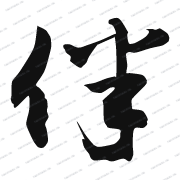
伴 (bàn) — Companion
Single-character Chinese tattoo · verified meaning · side by side
Browse all 伴 glyphs ↗Meaning & Nuance
伴 (bàn) means companion or to accompany — someone at your side. It is the everyday, warm word for a partner in life, work, or travel. It differs from 侣 (lǚ) in being more casual and common: 伴 is the friend or mate beside you, while 侣 carries a more poetic or romantic weight.
Pronunciation & Form
Pinyin: bàn — a fourth tone (falling) syllable, dropping cleanly from mid to low.
Common Words & Phrases
Why Get 伴 as a Tattoo
伴 is a tattoo of presence — 'I'm here, I stay.' It reads as 'companion' and is a heartfelt match piece for couples, siblings, or best friends. People choose 伴 to mark loyalty, shared journeys, or the simple promise of not being alone.
Tattoo Style & Placement
Great in fine-line, paired, or bold-script styles. Placements: inner wrist, forearm, ring area, or collarbone. Frequently inked as a matching set with 侣.
Authenticity & Cultural Note
Always confirm the character with a native speaker or linguist before inking. 伴 sounds identical to 半 (bàn, half) and is often swapped by auto-translators; a native-verified 伴 reads unambiguously as 'companion.' handmade.ink meanings are checked by native Chinese linguists so your ink says exactly what you intend.
Frequently Asked Questions
What does the Chinese character 伴 mean?
How is 伴 pronounced?
Is 伴 good for a matching tattoo?
What words use the character 伴?
How is 伴 different from 侣?
Can 伴 mean 'to accompany'?