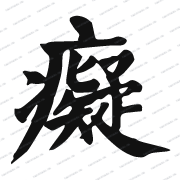
痴 (chī) — Obsession
Single-character Chinese tattoo · verified meaning · romantic & poetic friendly
Browse all 痴 glyphs ↗Meaning & Nuance
痴 (chī) originally meant foolish or silly, but in the language of love it became “devoted to the point of foolishness” — obsession, infatuation, single-minded attachment. 痴情 is a deeply devoted, almost reckless love. It carries warmth and a touch of self-sacrifice, distinct from 迷 (mí), which reads more as addicted, lost, or confused.
Pronunciation & Form
Pinyin: chī — a first-tone (high, level) syllable. The tone stays flat and bright, giving the word a steady, unwavering sound that suits its meaning of single-minded devotion.
Common Words & Phrases
Why Get 痴 as a Tattoo
痴 is romantic devotion that borders on obsession — a beautiful, slightly melancholic single character for love that refuses to let go. As a tattoo it speaks to loyalty taken to its limit, the kind of feeling that defines a person. It is compact and balanced, reading clearly even small, and it pairs naturally with 情, 爱, or 梦. People choose 痴 to honor an all-consuming love or a passion they can't and won't shake.
Tattoo Style & Placement
Best fits: fine-line, soft script, or gentle watercolor. 痴 has a calm, even structure that suits delicate work. Placements: inner wrist, collarbone, behind the ear, rib, or inner forearm. A small 痴 in a quiet script on the collarbone is quietly poetic. Size warning: keep the character at least ~4 mm tall per stroke group so it stays readable as skin ages.
Authenticity & Cultural Note
Always confirm the character with a native speaker or linguist before inking. In some compounds 痴 can mean “foolish” or “dull” (as in medical 痴呆), so context and pairing matter — handmade.ink meanings are checked by native Chinese linguists so your ink says exactly what you intend.
Frequently Asked Questions
What does the Chinese character 痴 mean?
How do you pronounce 痴?
Is 痴 a good tattoo meaning?
What words use the character 痴?
What is the difference between 痴 and 迷?