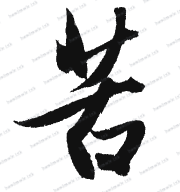
苦 (kǔ) — Suffering
Single-character Chinese tattoo · verified meaning · honest & resilient
Browse all 苦 glyphs ↗Meaning & Nuance
苦 (kǔ) means “bitter,” “suffering,” and “hardship.” It is the overarching term for suffering in Buddhist teaching and the “bitter” root of 痛苦 (suffering). Yet 苦 also carries dignity: 吃苦 (to endure hardship) is praised as character-building. It is distinct from 疼 (téng, ache) or 痛 (tòng, pain); 苦 is the broader bitter / suffering concept, often life-suffering rather than physical pain.
Pronunciation & Form
Pinyin: kǔ — a third tone, a dipping pitch that falls then rises, like a wince. The tone's dip mirrors the word's heavy meaning.
Common Words & Phrases
Why Get 苦 as a Tattoo
苦 is a raw, honest tattoo about having endured—and been strengthened by—hardship. It is not pessimistic; in Chinese culture 吃苦 (enduring bitterness) is a mark of resilience and maturity. People choose 苦 to acknowledge struggle, addiction recovery, or a hard chapter survived. The character is bold and balanced, readable at any size, and far more meaningful than a vague “struggle” translation. It says you carried the weight and kept going.
Tattoo Style & Placement
Best fits: bold line, blackwork, or traditional script. 苦 works as a medium-to-large single character. Placements: forearm, upper arm, rib, or back. A solid 苦 on the inner forearm is a quiet testament; it can pair with 尽 (kǔjìn, bitterness ends) themes. Keep the top 艹 (grass) radical clear above the 古 base.
Authenticity & Cultural Note
Always confirm the character with a native speaker or linguist before inking. 苦 (kǔ, bitter / suffering), 疼 (téng, ache), and 痛 (tòng, pain) are related but distinct; handmade.ink verifies you get 苦 for the broader “suffering / hardship” meaning.
Frequently Asked Questions
What does the Chinese character 苦 mean?
How do you pronounce 苦?
Is 苦 a good tattoo about overcoming struggle?
What words use the character 苦?
How is 苦 different from 痛?
Is 苦 only negative?