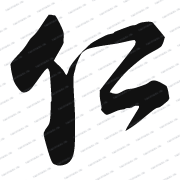
仁 (rén) — Benevolence
Single-character Chinese tattoo · verified meaning · fine-line & minimalist friendly
Browse all 仁 glyphs ↗Meaning & Nuance
仁 (rén) is one of the central virtues of Confucianism — humane kindness, benevolence, and the recognition of our shared humanity. It sits at the heart of the Confucian ideal of a good person: to treat others with care and dignity. In daily modern Chinese it still means “benevolent” or “humane.” A common confusion is between 仁 (rén, humaneness) and 忍 (rěn, endurance) — same sound family but very different meanings, so the character must be confirmed before inking.
Pronunciation & Form
Pinyin: rén — a second tone (rising) syllable, gliding upward like a question intonation. The character pairs the person radical 亻 on the left with 二 (“two”) on the right, a classic early shape suggesting “two people” and the relationships between them.
Common Words & Phrases
Why Get 仁 as a Tattoo
仁 captures the highest social virtue in Chinese thought — compassion toward others — making it a meaningful single-character tattoo for anyone who lives by kindness. It is compact, balanced, and instantly legible to Chinese readers, so it ages well as ink. People choose 仁 to mark a commitment to humanity, a calling in medicine or caregiving, or simply as a quiet personal ethic. Unlike trendier symbols, its moral weight gives it lasting power.
Tattoo Style & Placement
Best fits: fine-line, brush calligraphy, or small red-seal styles. 仁 is a simple two-part character that reads beautifully as a single vertical or horizontal mark. Placements: inner wrist, forearm, collarbone, or upper arm. It pairs naturally with 义 (righteousness) or 爱 (love) as a paired tattoo. Keep it at least a few millimeters tall so the two components stay distinct as skin ages.
Authenticity & Cultural Note
Always confirm the character with a native speaker or linguist before inking. 仁 (rén) is easily confused with 忍 (rěn, endurance) and 人 (rén, person) in casual reference, and a mix-up changes the meaning entirely. handmade.ink meanings are checked by native Chinese linguists so your ink says exactly what you intend.
Frequently Asked Questions
What does the Chinese character 仁 mean?
How do you pronounce 仁?
Is 仁 a good tattoo meaning?
What words use the character 仁?
What is the difference between 仁 and 忍?
Is 仁 related to Confucianism?