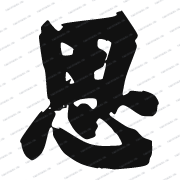
思 (sī) — Thought / Longing
Single-character Chinese tattoo · verified meaning · quiet, introspective line-work
Browse all 思 glyphs ↗Meaning & Nuance
思 (sī) means “thought,” “to ponder,” and—most poetically—“longing” or “to miss someone.” Its top component sits above 心 (heart), so the character itself suggests thinking with feeling rather than cold calculation. In classical Chinese poetry 思 carries a gentle, yearning quality—thinking of a faraway person—rather than abstract reasoning. It is sometimes confused with 想 (xiǎng, to want / think of); 思 is the softer, more reflective of the two.
Pronunciation & Form
Pinyin: sī — a first tone, a steady high level pitch held even, like a calm sustained note. It is an open syllable with no tonal dip or rise, which gives the word a settled, contemplative sound.
Common Words & Phrases
Why Get 思 as a Tattoo
思 captures the inner life—reflection, memory, and quiet love for someone absent—which is exactly why it works as a single-character tattoo. It is a word people choose to mark grief turned to remembrance, long-distance love, or simply a commitment to living thoughtfully. The character is balanced and compact, staying legible even at small sizes, and it reads as meaningful rather than decorative to Chinese readers. Few characters carry this much inner depth in a single stroke of ink.
Tattoo Style & Placement
Best fits: fine-line, minimalist, or brush-script. 思 is moderate in complexity, so it suits a small-to-medium single character rather than a tiny micro-tattoo. Placements: inner forearm, collarbone, rib, upper back, or behind the ear. A fine-line 思 on the inner wrist pairs well with a date or coordinates. Calligraphic styles emphasize the flowing 心 at the base; keep proportions even so the two stacked parts stay readable as the skin ages.
Authenticity & Cultural Note
Always confirm the character with a native speaker or linguist before inking. 思, 想, and 念 are easy to mix up by machine translation, and each carries a distinct shade of “thinking / longing.” handmade.ink meanings are checked by native Chinese linguists, so your 思 says precisely “thought and longing,” not something adjacent.
Frequently Asked Questions
What does the Chinese character 思 mean?
How do you pronounce 思?
Is 思 a good tattoo for missing someone?
What words use the character 思?
What is the difference between 思 and 想?
Does 思 contain the heart?