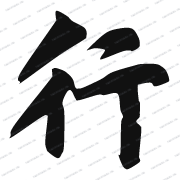
行 (xíng) — Action / Deed
Single-character Chinese tattoo · verified meaning · action & movement theme
Browse all 行 glyphs ↗Meaning & Nuance
行 (xíng) means “to go,” “to act,” or “a deed.” It is the Confucian ideal of putting knowledge into practice and the everyday word for movement. As a tattoo it is a call to action — stop waiting, do the thing. It differs from 走 (zǒu, to walk) in being broader (act/live), and from 为 (wéi, to do) in emphasizing the journey.
Pronunciation & Form
Pinyin: xíng — a second-tone (rising) syllable. (Note: the same character is read háng for “line/profession,” as in 银行, bank.) The character is built from two walking-road elements, suggesting a path in motion.
Common Words & Phrases
Why Get 行 as a Tattoo
行 is a motivating tattoo — chosen by people who value doing over deliberating. It reads as “action/go” to Chinese readers and is compact and graphic. It pairs with 动 (dòng, move) as 行动, or stands alone as a personal motto to keep moving forward.
Tattoo Style & Placement
Best fits: fine-line, minimalist, or bold brush. 行 has a wide, balanced stance that works as a single character on the forearm, ribs, or upper arm. A small 行 on the wrist or collarbone is a quiet nudge. Keep it at least ~4–5 mm tall so both halves stay clear.
Authenticity & Cultural Note
Always confirm the character with a native speaker or linguist before inking. 行 is read xíng for “act/go” but háng for “line/profession” (银行 = bank); make sure your artist uses the intended sense. handmade.ink meanings are checked by native Chinese linguists.
Frequently Asked Questions
What does the Chinese character 行 mean?
How do you pronounce 行?
Is 行 a good tattoo for a call to action?
What words use the character 行?
What is the difference between 行 and 走?
Can 行 be paired with another character?