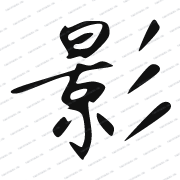
影 (yǐng) — Shadow
Single-character Chinese tattoo · verified meaning · fine-line & minimalist friendly
Browse all 影 glyphs ↗Meaning & Nuance
影 (yǐng) means “shadow” — the silhouette, reflection, and the trace things leave behind. In Chinese poetry shadow is a companion image to moon and water, evoking solitude and transience. As a tattoo it reads as mystery and the unseen self. It combines 景 (scene) on the left with the brush-strokes radical 彡 on the right. Not to be confused with 印 (yìn, seal/stamp).
Pronunciation & Form
Pinyin: yǐng — a third tone (dipping) syllable, falling then rising. 影 pairs the “scene” element 景 on the left with 彡 (shān, brush/lines) on the right, suggesting light and form.
Common Words & Phrases
Why Get 影 as a Tattoo
影 represents the quiet, reflective side of self — a poetic single-character tattoo for introspective souls. Its layered form stays readable at moderate size. People choose 影 to honor solitude, memory, or the idea that we are more than what others see. It reads clearly as “shadow” and carries depth rather than trend.
Tattoo Style & Placement
Best fits: fine-line, negative-space, or soft watercolor that plays with light and dark. 影 works on a forearm or rib. Placements: inner forearm, side rib, back, or collarbone. Pairs with 月, 水, or 云. Keep both components legible.
Authenticity & Cultural Note
Always confirm the character with a native speaker or linguist before inking. 影 (yǐng, shadow) is easily confused with 印 (yìn, seal); verify the exact glyph so your tattoo reads as “shadow.” handmade.ink meanings are checked by native Chinese linguists.
Frequently Asked Questions
What does the Chinese character 影 mean?
How do you pronounce 影?
Is 影 a good tattoo for introspection?
What words use the character 影?
What is the difference between 影 and 印?
Why is 影 used in 电影 (movie)?