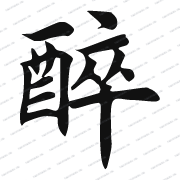
醉 (zuì) — Drunk / Intoxicated
Single-character Chinese tattoo · verified meaning · poetic & dreamy friendly
Browse all 醉 glyphs ↗Meaning & Nuance
醉 (zuì) means drunk, but its richest use is metaphorical: 陶醉 is to be enraptured, “drunk” on beauty, music, or love, and 沉醉 is to be deeply immersed. It captures losing oneself blissfully in something. It differs from 酒 (jiǔ, alcohol), which is the substance; 醉 is the delicious state of being swept away.
Pronunciation & Form
Pinyin: zuì — a fourth-tone (sharp, falling) syllable. The tone falls decisively, like the gentle collapse of someone happily overcome.
Common Words & Phrases
Why Get 醉 as a Tattoo
醉 is for someone who lives intoxicated by love, art, or life — “drunk on joy” captured in one character. As a tattoo it is poetic and romantic rather than literal, a quiet confession of how fully something moves you. It is balanced and readable small, pairing with 爱, 梦, or 心. People choose 醉 to honor a passion that sweeps them off their feet.
Tattoo Style & Placement
Best fits: watercolor, soft script, or fine-line with a dreamy feel. 醉's elegant right side suits flowing, lyrical work. Placements: inner forearm, collarbone, rib, or behind the ear. A small 醉 in a loose script looks like a sigh. Size warning: keep the character at least ~4 mm tall per stroke group so it stays readable as skin ages.
Authenticity & Cultural Note
Always confirm the character with a native speaker or linguist before inking. 醉 is usually positive in its metaphorical sense (陶醉), but verify any companions — handmade.ink meanings are checked by native Chinese linguists so your ink says exactly what you intend.
Frequently Asked Questions
What does the Chinese character 醉 mean?
How do you pronounce 醉?
Is 醉 a good tattoo meaning?
What words use the character 醉?
What is the difference between 醉 and 酒?