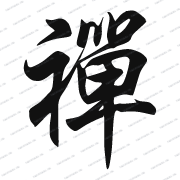
禅 (chán) — Zen
Single-character Chinese tattoo · verified meaning · meditative & minimalist friendly
Browse all 禅 glyphs ↗Meaning & Nuance
禅 (chán) is the Chinese rendering of “Zen” — meditation, contemplation, and the sudden clarity of Buddhist insight. It refers both to the Chan (Zen) school of Buddhism and to a state of calm, wordless awareness. As a tattoo it signals a mindful, inward life. Its close cousin 道 (dào, “the Way”) is broader and more philosophical, while 禅 is specifically about seated meditation and awakened presence.
Pronunciation & Form
Pinyin: chán — a second tone (rising), the pitch gliding upward. It is a soft, flowing syllable that matches the character’s contemplative mood.
Common Words & Phrases
Why Get 禅 as a Tattoo
禅 is a favorite among people who want ink about stillness rather than story. A single 禅 speaks to meditation, presence, and the quiet that survives a busy life — meanings recognized well beyond China because “Zen” entered many languages. It is short, elegant, and gender-neutral, and it carries none of the romantic or aggressive connotations that trip up other characters.
Tattoo Style & Placement
Best fits: fine-line, brush-calligraphy, or enso-style designs where negative space matters. Placements: inner wrist, upper arm, back of the neck, or the side of the rib. A small 禅 beside a drawn circle (enso) is a timeless composition. Because the character is compact, keep it small and let breathing room do the work.
Authenticity & Cultural Note
Always confirm the character with a native speaker or linguist before inking. 禅 is sometimes written in its traditional form 禪, and machine tools may swap related Buddhist characters. A verified 禅 ensures your tattoo reads precisely as “Zen / meditation.” handmade.ink meanings are checked by native Chinese linguists so your ink says exactly what you intend.
Frequently Asked Questions
What does the Chinese character 禅 mean?
How do you pronounce 禅?
Is 禅 a good tattoo for meditation or mindfulness?
What words use the character 禅?
What is the traditional form of 禅?
What is the difference between 禅 and 道?