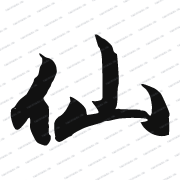
仙 (xiān) — Immortal
Single-character Chinese tattoo · verified meaning · ethereal script & nature-friendly
Browse all 仙 glyphs ↗Meaning & Nuance
仙 (xiān) is the Chinese character for “immortal” or “celestial being” — the transcendent figures of Daoist legend who live forever among mountains and clouds. 仙 carries a sense of lightness, freedom from mortal cares, and harmony with nature. It pairs with 神 (shén, spirit) as 神仙. It is distinct from 先 (xiān, “first/before”), which sounds identical but means something else entirely.
Pronunciation & Form
Pinyin: xiān — a first-tone (high, level) syllable, held steady and bright. The character combines the person radical 亻 on the left with 山 (shān, mountain) on the right — a “person of the mountains,” fittingly.
Common Words & Phrases
Why Get 仙 as a Tattoo
仙 is a tattoo of transcendence — the wish to rise above worry and live freely, close to nature and far from the mundane. As a single character it reads clearly as “immortal” to Chinese readers and carries an ethereal, poetic feel. It suits dreamers, wanderers, and spiritual seekers. Pair it with 山 (mountain) or 云 (cloud) for a celestial, light composition.
Tattoo Style & Placement
Best fits: fine-line, watercolor, or soft brush styles. 仙 is elegant and airy, ideal as a small-to-medium piece on the forearm, collarbone, or shoulder. A cloud or mountain accent enhances its float. Font note: a light, flowing script keeps its ethereal quality; keep it at least ~3–4 cm tall so the right-side mountain strokes stay readable.
Authenticity & Cultural Note
Always confirm the character with a native speaker or linguist before inking. 仙 (immortal) sounds exactly like 先 (xiān, “first/before”) but means something completely different — a wrong character changes the meaning entirely. handmade.ink meanings are checked by native Chinese linguists so your ink says exactly what you intend.
Frequently Asked Questions
What does the Chinese character 仙 mean?
How do you pronounce 仙?
Is 仙 a good tattoo for freedom or spirituality?
What is the difference between 仙 and 先?
What words use the character 仙?