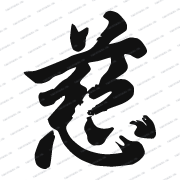
慈 (cí) — Compassion
Single-character Chinese tattoo · verified meaning · compassion & kindness theme
Browse all 慈 glyphs ↗Meaning & Nuance
慈 (cí) means “compassion,” “kindness,” and tender care — especially the protective love of a parent. In Buddhism 慈悲 (cíbēi) is the universal compassion of a bodhisattva. As a tattoo it conveys gentle, selfless warmth rather than fierce strength. It is softer than 仁 (rén, benevolence) and more nurturing than 善 (shàn, goodness).
Pronunciation & Form
Pinyin: cí — a second-tone (rising) syllable. The character sets 兹 on top over 心 (xīn, heart) at the bottom — compassion as something rooted in the heart.
Common Words & Phrases
Why Get 慈 as a Tattoo
慈 is a tender, meaningful tattoo for those who lead with care — parents, caregivers, or anyone who wants to wear kindness. It reads as “compassion” to Chinese readers and has a soft, rounded form that suits gentle script styles. It pairs with 悲 as 慈悲 (the classic Buddhist compassion) or stands alone as quiet warmth.
Tattoo Style & Placement
Best fits: fine-line, soft script, or brush calligraphy. 慈 is a fuller character, so give it a little room on the inner forearm, upper arm, ribs, or back. A small 慈 on the wrist or collarbone works in fine-line. Keep it at least ~5 mm tall so the bottom 心 stays legible.
Authenticity & Cultural Note
Always confirm the character with a native speaker or linguist before inking. 慈 (cí) is sometimes confused with 辞 (cí, words/quit) or 磁 (cí, magnet) by translation tools; a verified 慈 reads as “compassion.” handmade.ink meanings are checked by native Chinese linguists.
Frequently Asked Questions
What does the Chinese character 慈 mean?
How do you pronounce 慈?
Is 慈 a good tattoo for kindness?
What words use the character 慈?
What is the difference between 慈 and 仁?
Can 慈 be paired with another character?