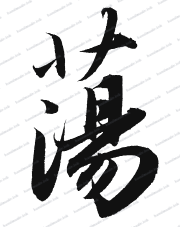
荡 (dàng) — Sway
Single-character Chinese tattoo · verified meaning · movement that breathes
Browse all 荡 glyphs ↗Meaning & Nuance
荡 (dàng) means to sway, swing, or ripple; it also means to wash over or, in older usage, a pond. Poetically it suggests something moved by wind or feeling — a heart swaying, water undulating. It differs from 摇 (yáo, to shake) in being gentler and more about being moved than actively shaking.
Pronunciation & Form
Pinyin: dàng — a fourth tone (falling) syllable, dropping decisively from mid to low.
Common Words & Phrases
Why Get 荡 as a Tattoo
荡 is for the sensitive and the moved — a tattoo about being touched by wind, music, or feeling rather than staying rigid. It reads as 'sway' and feels alive next to water, wind, or moon themes. People choose 荡 to mark a heart that still responds, a life in gentle motion, or freedom from stiffness.
Tattoo Style & Placement
Works in flowing script, watercolor, or fine-line. Placements: forearm, shoulder, side rib, or upper back. Let the strokes feel loose and unforced rather than rigid.
Authenticity & Cultural Note
Always confirm the character with a native speaker or linguist before inking. 荡 is easily confused with look-alikes like 汤 (tāng, soup) and 烫 (tàng, hot); a native-verified 荡 reads unambiguously as 'sway.' handmade.ink meanings are checked by native Chinese linguists so your ink says exactly what you intend.
Frequently Asked Questions
What does the Chinese character 荡 mean?
How do you pronounce 荡?
Is 荡 a good tattoo?
What words use the character 荡?
How is 荡 different from 摇?
Can 荡 be negative?