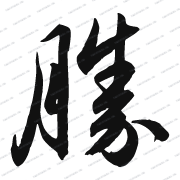
胜 (shèng) — Victory
Single-character Chinese tattoo · verified meaning · triumphant & clean
Browse all 胜 glyphs ↗Meaning & Nuance
胜 (shèng) means “victory,” “to win,” and “to surpass.” It is the character of triumph—胜利 (victory), 战胜 (to overcome). In a personal sense it resonates with beating illness, addiction, or the odds. It differs from 赢 (yíng, to win a game / gain) by being more about prevailing over adversity than scoring; and from 克 (kè, to overcome) by being the celebratory end state. A clean, confident single-character tattoo.
Pronunciation & Form
Pinyin: shèng — a fourth tone, a falling pitch that lands firmly, like a winner's closing note. The tone's decisiveness fits a word about triumph. (Note: read shēng in older senses like “able to bear.”)
Common Words & Phrases
Why Get 胜 as a Tattoo
胜 is the character for victory and overcoming—ideal for marking a hard-won win: recovery, a personal battle, or simply beating the odds. It is concise, balanced, and reads clearly as “victory” to Chinese readers, avoiding the mistranslations that plague English “win” tattoos. The character holds up at any size and carries quiet confidence rather than arrogance. People choose 胜 to carry their triumph forward.
Tattoo Style & Placement
Best fits: bold line, brush, or clean minimalist. 胜 works as a medium single character. Placements: forearm, upper arm, collarbone, or rib. A confident 胜 on the inner forearm is a personal trophy; it pairs with 利 (shènglì, victory) themes. Keep the left 月 radical distinct from the right component.
Authenticity & Cultural Note
Always confirm the character with a native speaker or linguist before inking. 胜 (shèng, victory) is sometimes confused with 盛 (shèng, prosperous / full) or 升 (shēng, rise); handmade.ink verifies you get the victory character.
Frequently Asked Questions
What does the Chinese character 胜 mean?
How do you pronounce 胜?
Is 胜 a good tattoo for overcoming struggle?
What words use the character 胜?
How is 胜 different from 赢?
How does 胜 differ from 克?