
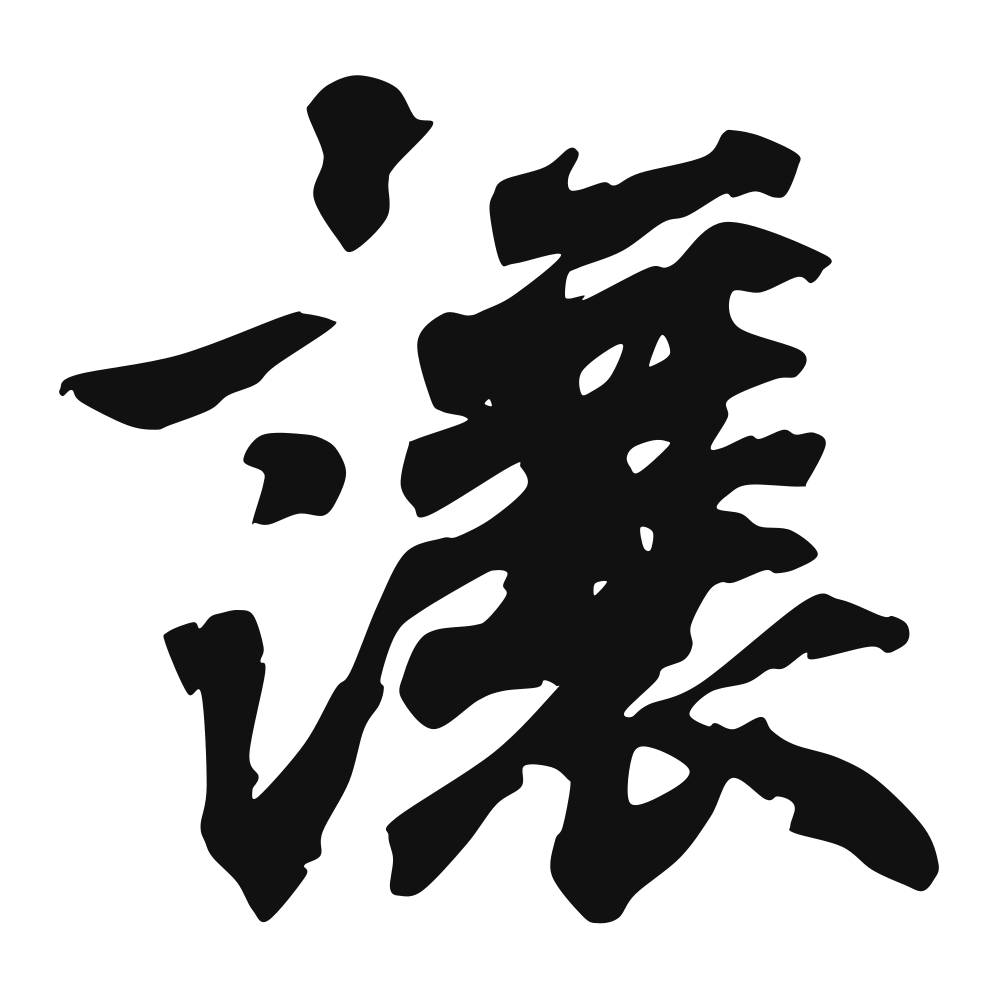
让
to yield; to permit; to let sb do sth; to have sb do sth; to make sb (feel sad etc); by (indicates the agent in a passive clause, like 被[bei4])
Closest English meanings
let·yield·allow·give way
The Calligrapher — Wáng Xīzhī 王羲之
The 'Sage of Calligraphy'; his running script has set the standard for 1,700 years.
Eastern Jin calligrapher (303–361), master of running script/cursive script/regular script — the Sage of Calligraphy; his Orchid Pavilion Preface is the most celebrated work in the tradition, and nearly every later master traces lineage to his hand. Eastern Jin dynasty
Cultural Story
Confucius was remembered by his disciples as gentle, calm, courteous, frugal, and rang, yielding. The fifth of those virtues, wen liang gong jian rang, made stepping back a form of greatness, the courtesy of giving the path to another. The character joins words to a sound of retreat; to rang was to decline the front place at the table, the louder voice, the first reward. It is the quiet etiquette that lets a room hold more than one proud person.
Common words & phrases
- 让座 offer seat
- 让步 concede · yield
- 让路 make way · yield
- 让开 step aside
- 谦让 modest · yield
- 忍让 forbear · give in
Read the story behind the character
A rider rang zuo, gives up a seat, to an elder on the bus; a firm rang bu, concedes, in the negotiation; a car rang lu, makes way, for the ambulance; a crowd rang kai, steps aside, for the procession; a host qian rang, modestly yields, the honor; a neighbor ren rang, forbears, a small slight. The character is the daily grammar of courtesy, the hundred small retreats that keep strangers from becoming enemies on a staircase.
Own this character
Purchase delivers the original SVG of this glyph, brushed by Wáng Xīzhī 王羲之, ready to place on skin, paper, or screen.