
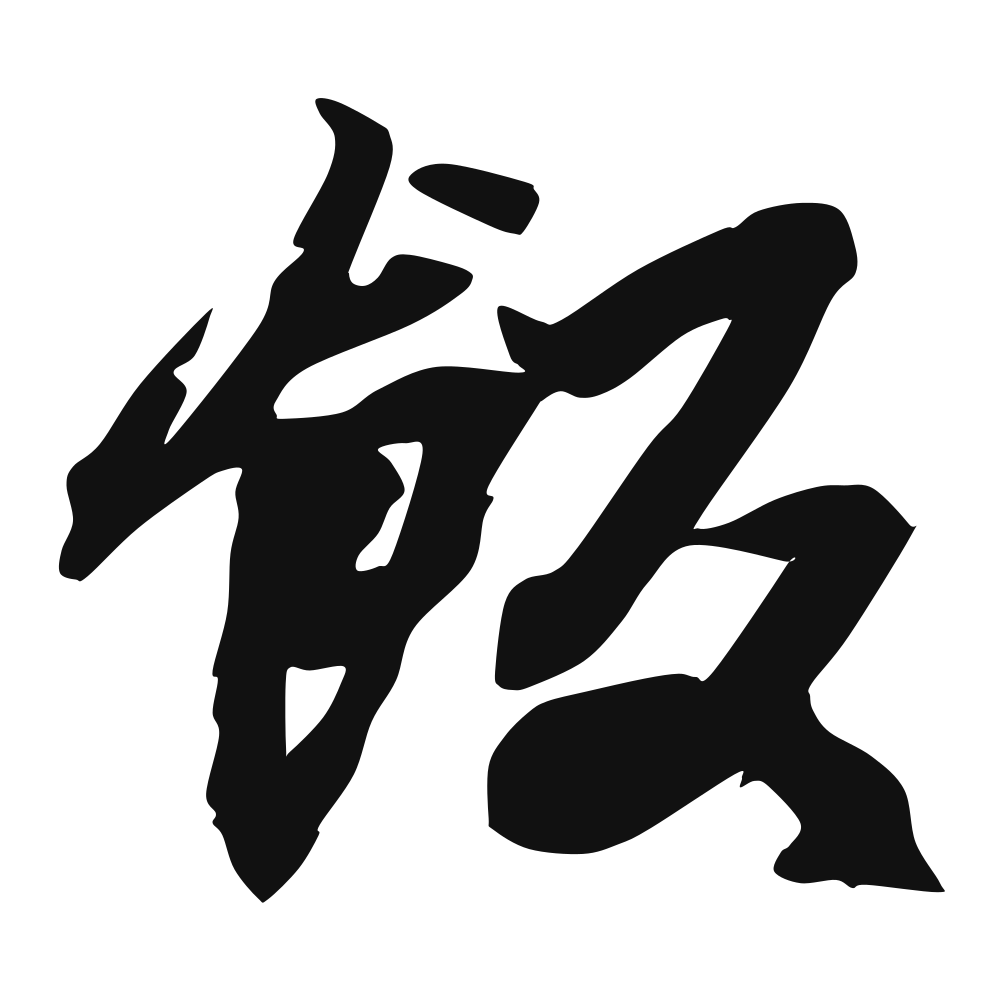
饭
cooked rice; meal; (loanword) fan; devotee
Closest English meanings
rice·meal·food
The Calligrapher — Wáng Xīzhī 王羲之
The 'Sage of Calligraphy'; his running script has set the standard for 1,700 years.
Eastern Jin calligrapher (303–361), master of running script/cursive script/regular script — the Sage of Calligraphy; his Orchid Pavilion Preface is the most celebrated work in the tradition, and nearly every later master traces lineage to his hand. Eastern Jin dynasty
Cultural Story
饭 (fàn) pairs 食 with the phonetic 反. 《説文解字》 says 食也, specifically cooked rice eaten as a meal. From the Han onward it named the staple grain that fills the bowl at every ordinary sitting.
Common words & phrases
- 吃饭 eat
- 米饭 cooked rice
- 饭店 hotel · restaurant
- 做饭 cook
- 午饭 lunch
- 早饭 breakfast
Read the story behind the character
饭 is daily life. We 吃饭 (eat), steam 米饭 (cooked rice), run a 饭店 (restaurant or hotel), 做饭 (cook), and eat 午饭 (lunch) or 早饭 (breakfast). For most people, 饭 simply means a meal at home.
Why this character belongs on skin
There is a hunger that is older than any appetite, and the small bowl set before you at the low table answers it. Fàn is not merely food; it is the daily covenant between the living and the day — the steam that rises, the chopsticks lifted in thanks, the rice that holds a family in one warm circle. Confucius said the rites begin at the table, and so they do: to share a meal is to acknowledge that we are creatures who must be fed, and who feed one another. In war and in exile the single bowl of fàn has been a home carried in the hand. To wear this character is to honor the ordinary sacrament of being nourished, to remember that survival is a kind of grace. Let it rest near your wrist, where you lift and where you give, a quiet mark that you were fed, and that you feed.
Own this character
Purchase delivers the original SVG of this glyph, brushed by Wáng Xīzhī 王羲之, ready to place on skin, paper, or screen.