
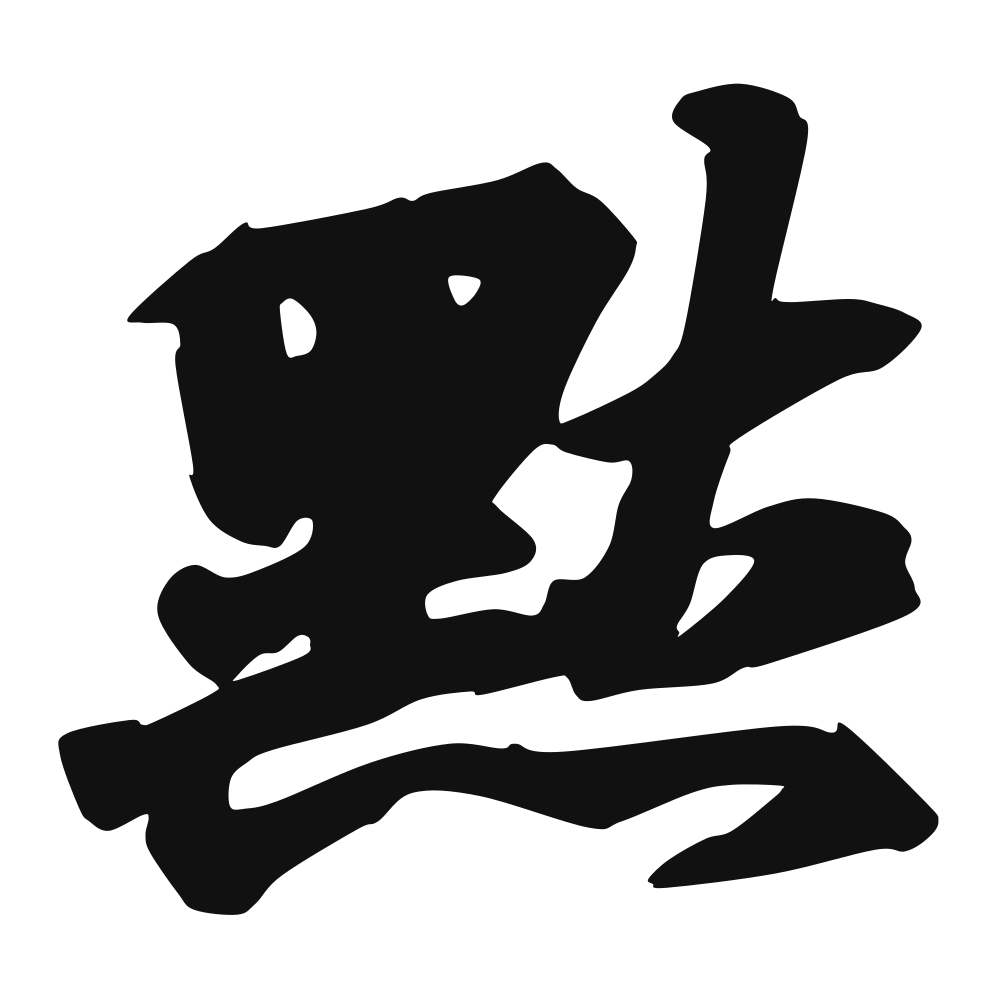
默
silent; to write from memory
Closest English meanings
silent·quiet
The Calligrapher — Wáng Xīzhī 王羲之
The 'Sage of Calligraphy'; his running script has set the standard for 1,700 years.
Eastern Jin calligrapher (303–361), master of running script/cursive script/regular script — the Sage of Calligraphy; his Orchid Pavilion Preface is the most celebrated work in the tradition, and nearly every later master traces lineage to his hand. Eastern Jin dynasty
Cultural Story
《説文解字》gives 默 as “犬暫逐人也” (a dog that suddenly chases), a compound of black and dog. The sense of a dog holding still then springing yielded “silent, still.” By extension 默 meant to keep quiet, and the word rode into speech for unspoken agreement and inward thought.
Common words & phrases
- 沉默 silent · silence
- 默认 default · tacitly accept
- 默写 write from memory
- 默念 read silently
- 默然 silent · wordless
- 幽默 humor
Read the story behind the character
We fall 沉默 (silent) in grief, accept a 默认 (default) without a word, and 默写 (write from memory) in exams. We 默念 (read silently) a prayer and sit 默然 (wordless) at loss; even 幽默 (humor) keeps the root of quiet. 默 is the art of saying nothing aloud.
Why this character belongs on skin
Those who know do not speak; those who speak do not know. So the Daoists taught, and 默 is the character that honors the knowing kept wordless — the still pond, the unsaid thing that holds more than any sermon. Silence here is not absence but fullness, the room before the note, the presence behind the face. To wear it is to claim the discipline the loud world fears: the strength to not perform, to let the inner life stay inner. It is the monk's vow and the lover's restraint, the wisdom of the closed mouth. Ink it where your own silence gathers — the throat, the lips you've bitten — and let it mean the peace of the unuttered. We fill every gap with noise to prove we live. 默 is the opposite confidence: the proof you are full enough to need no sound. The deepest truth wears no words.
Own this character
Purchase delivers the original SVG of this glyph, brushed by Wáng Xīzhī 王羲之, ready to place on skin, paper, or screen.