
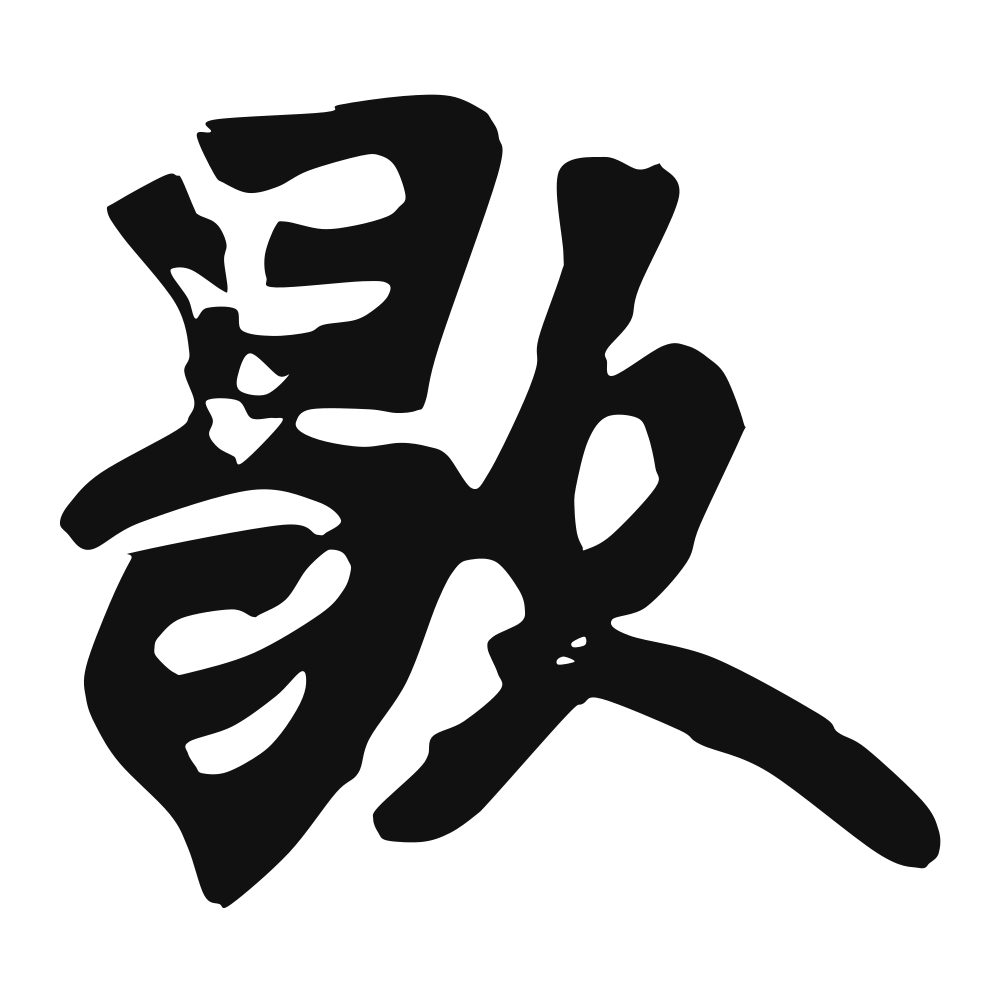
歇
to rest; to take a break; to stop; to halt; (dialect) to sleep; a moment; a short while
Closest English meanings
rest·stop·halt
The Calligrapher — Wáng Xún 王珣
Eastern Jin aristocrat whose letter is a running-script treasure.
Eastern Jin calligrapher (349–400), master of running script — known for 《伯远帖》. Eastern Jin dynasty
Cultural Story
歇 meant to rest and to stop, a pause in the day's labour. The Shuowen reads it as a cessation, and travellers on foot knew the relief of 歇脚 resting on a journey, loosening the load at a teahouse. A shop might 歇业 close its doors for the holiday, and a tired body simply 歇息 rested, letting the world slow for a moment.
Common words & phrases
- 歇息 rest
- 歇脚 rest on a journey
- 停歇 stop · cease
- 歇业 close business
- 歇着 resting
Read the story behind the character
Today 歇 is the small break everyone needs: workers 歇息 rest at noon, hikers 歇脚 pause on a trail, and a vendor 停歇 stops selling at dusk. A shop may 歇业 close for renovation, and a grandparent tells a child to 歇着 rest a while. From a coffee break to a closed sign, 歇 names the pauses that make a busy life bearable.
Why this character belongs on skin
The character pictures exhaustion meeting breath — the left side means to lack, to be used up; the right is the breath of thirst, a body crying out for water. Together they make 歇: the sanctioned stop, the rest that is not surrender but response. Our culture worships the grind and treats rest as theft, but every older wisdom disagrees. The Sabbath was commanded, not suggested. Soldiers camp; rivers pool in the bends before they run faster; the string that is never slackened loses its tone. Even love needs its silences to stay alive. 歇 is the intelligence to know when you are spent — and the deeper intelligence to know that stopping is part of the work, the inhale between phrases of a song. To wear this is to declare that you answer to your own rhythm, not the clock's. You go hard, and then, without apology, you rest.
Own this character
Purchase delivers the original SVG of this glyph, brushed by Wáng Xún 王珣, ready to place on skin, paper, or screen.