
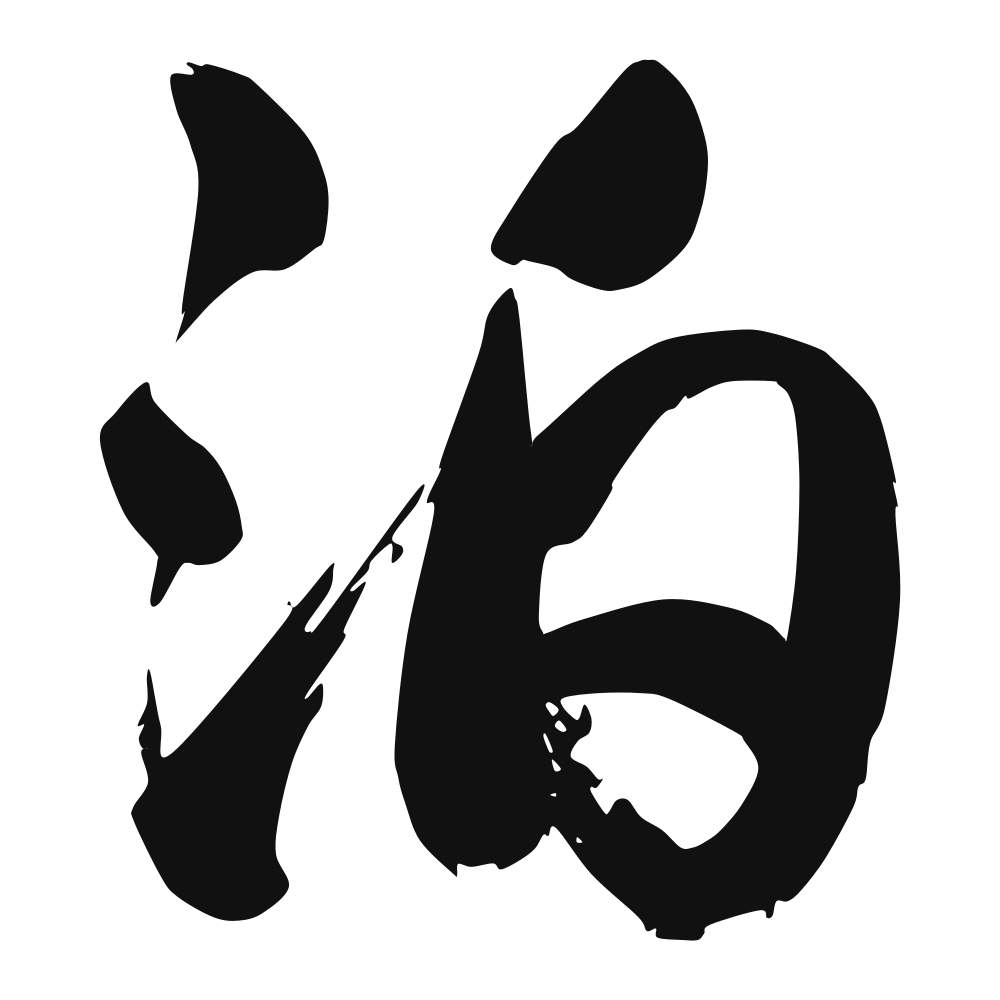
泊
to moor (a boat); to park (a vehicle); (literary) calm; quiet; peaceful; lake; Taiwan pr. [bo2]
Closest English meanings
moor·lake·tranquil·anchor
The Calligrapher — Wáng Xún 王珣
Eastern Jin aristocrat whose letter is a running-script treasure.
Eastern Jin calligrapher (349–400), master of running script — known for 《伯远帖》. Eastern Jin dynasty
Cultural Story
泊 means to moor a boat; the 說文 gives to anchor. The 莊子 praises 淡泊 as true freedom. Wanderers 漂泊 from shore to shore. 湖泊 dot the southern land, and a still mind is said to 泊 like a boat at peace on calm water.
Common words & phrases
- 停泊 moor · anchor · berth
- 湖泊 lake · lakes
- 漂泊 drift · wander · lead a wandering life
- 淡泊 indifferent · unambitious · plain
- 泊车 park a car · pull over
Read the story behind the character
The ferry 停泊 (moors) at the island dock. He 泊车 (parks the car) in a tight spot. A novelist 漂泊 (drifts, wanders) between cities for a year. She lives 淡泊 (plain, unambitious), shunning fame. Tourists photograph the misty 湖泊 (lakes) of the plateau at sunrise.
Why this character belongs on skin
Beyond the rapids there is a stillness so complete the moon forgets to move. 泊 is the lake, the wide water that gathers and goes nowhere, and as a verb, to moor, to tie the boat and rest. The poet speaks of drifting, but 泊 itself is the opposite: the choice to stop. In a life of current and weather, to 泊 is the rarest courage, the refusal to be carried further. On your arm this character is a small harbor, a promise to yourself that somewhere you will tie off and be still. Strangers will read calm from your ink without knowing the word. Let them. The lake does not announce itself; it simply holds the sky. You were built to move, and still you chose the dock, and that choosing is the only rest worth having.
Own this character
Purchase delivers the original SVG of this glyph, brushed by Wáng Xún 王珣, ready to place on skin, paper, or screen.