
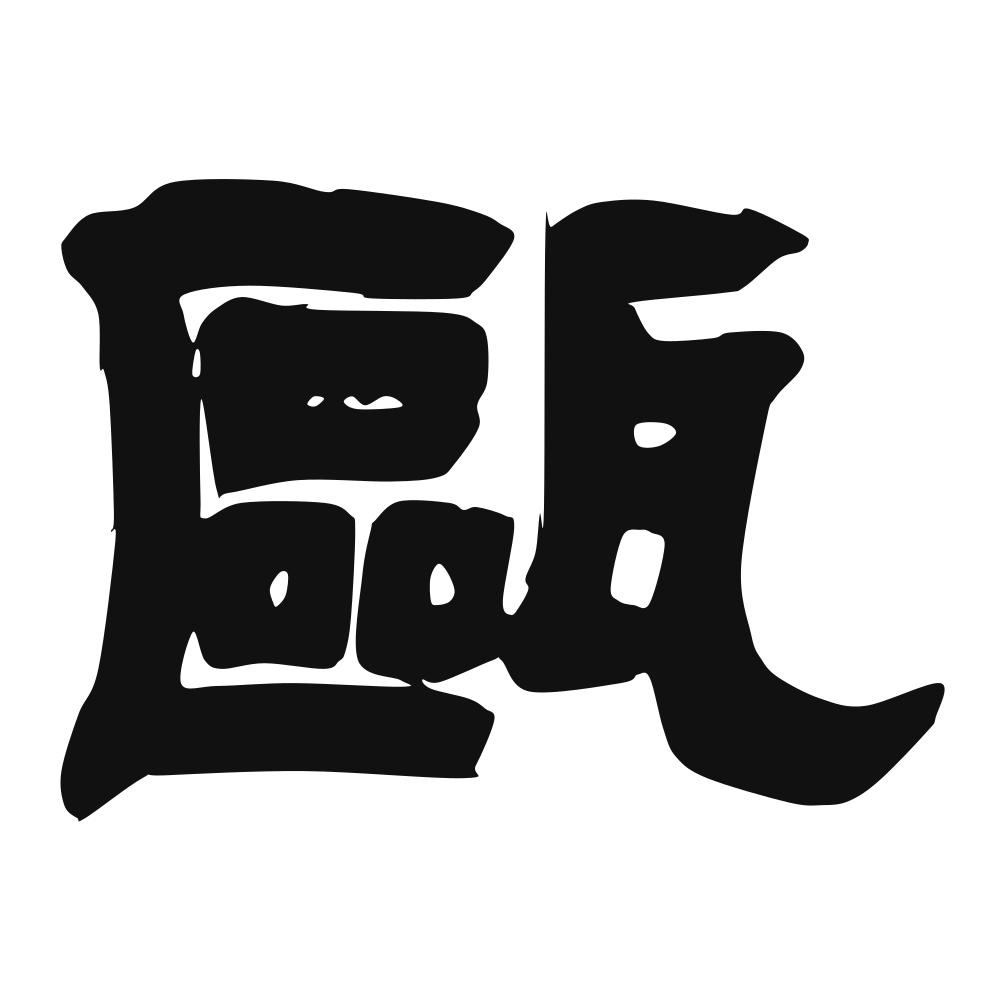
瓯
(pottery) bowl or drinking vessel
Closest English meanings
bowl·cup·Wenzhou
The Calligrapher — Wáng Xún 王珣
Eastern Jin aristocrat whose letter is a running-script treasure.
Eastern Jin calligrapher (349–400), master of running script — known for 《伯远帖》. Eastern Jin dynasty
Cultural Story
The ou is a small deep bowl — tea-drinkers' favorite — and the name of an ancient eastern kingdom, Dong'ou, whose territory anchors modern Wenzhou. The old blessing 金瓯无缺, a golden bowl unchipped, meant the realm's territory whole and safe, a bowl every dynasty hoped not to crack.
Common words & phrases
- 茶瓯 tea bowl
- 金瓯 golden bowl · territory
- 瓯绣 Ou embroidery
Read the story behind the character
Wenzhou still pours its famous tea from a 茶瓯, tea bowl, and its embroidery is 瓯绣, one of Zhejiang's prized crafts. Locals call themselves Ou people, the map marks 瓯江, the Ou River, and the little bowl turned out to hold an entire regional identity.
Why this character belongs on skin
Tea began its long courtship with humanity in vessels like this. 瓯 is the small bowl—round-bellied, modest, cupped exactly to a pair of hands—and for a thousand years in the south, tea was beaten and shared bowl by bowl, steam rising, poems following. Lu Yu wrote that the good bowls made the tea taste better, and he was not being fanciful: what holds a thing changes how you receive it. A 瓯 is small on purpose. It holds one serving, no more—an argument against excess, a lesson in enough. The monk drinking alone at dusk understood: this much warmth, this much bitterness, this much sweetness, and it is complete. To wear 瓯 is to carry that proportion in your bones. Take what a bowl holds. Warm what you hold. Offer it with both hands. That, the vessel says quietly, was never a small life.
Own this character
Purchase delivers the original SVG of this glyph, brushed by Wáng Xún 王珣, ready to place on skin, paper, or screen.