
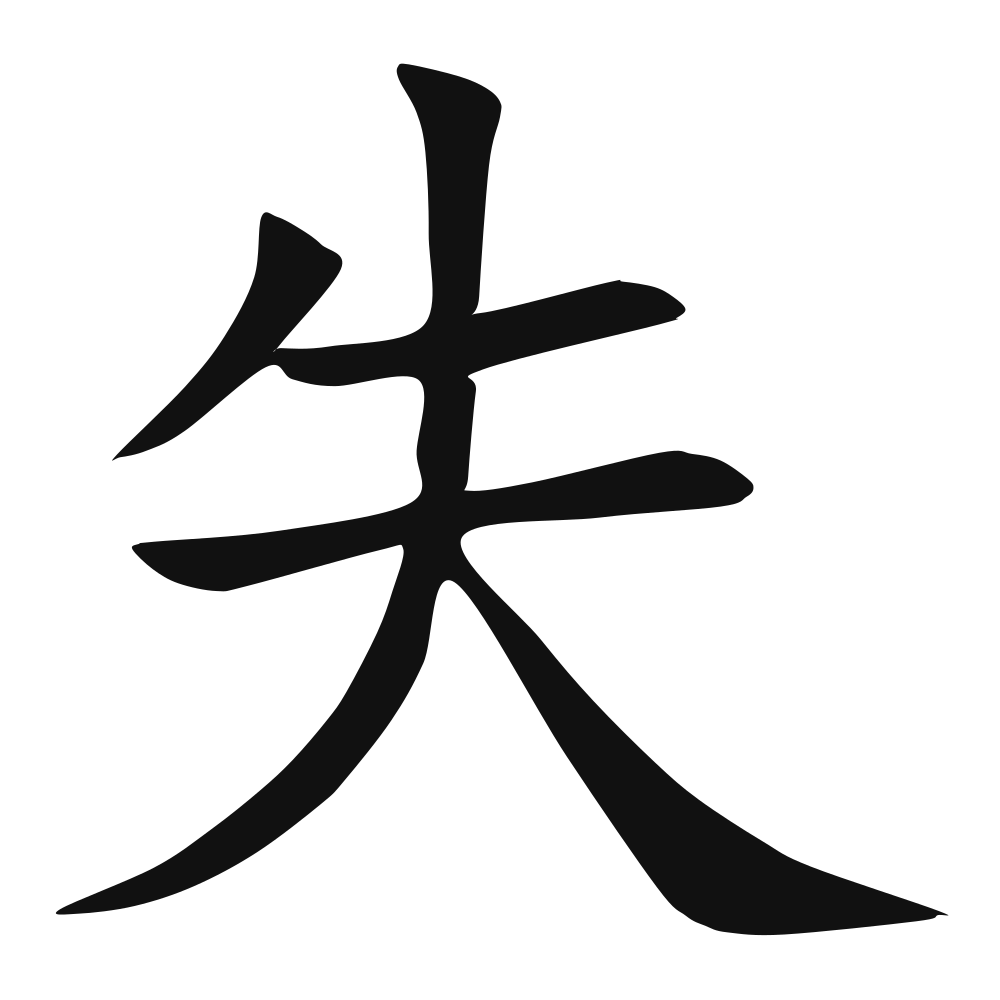
失
to lose; to miss; to fail
Closest English meanings
lose·miss·fail
The Calligrapher — Wáng Yì 王廙
Jin calligrapher, uncle and teacher of Wang Xizhi; master of running and cursive script
Jin calligrapher (), master of running script/cursive script/regular script — known for 王羲之叔父. Jin dynasty
Cultural Story
失 means to lose and to fail. The 论语 warns a 君子 不失 (does not err) in daily conduct before others; 失败 (defeat) ended many a 三国 (Three Kingdoms) campaign on the field. 失望 (disappointed) wrote itself into Tang exile poems by the road; 丢失 (misplace) a official seal meant disgrace. The character is the thing that was there and is not.
Common words & phrases
- 失去 lose
- 失败 fail · defeat
- 失望 disappointed
- 丢失 lose · misplace
- 失手 mistake · accident
Read the story behind the character
A 手机 (phone) 丢失 (lost) triggers a find-my-device app at once; 失败 (failure) ends a startup pitch in the room. 失望 (disappointed) fills a one-star review of the hotel; 失手 (a slip) drops a dish on the floor. Lost-phone maps ping 失 the moment a signal drops. The word still names absence — of a device, a match, a hand.
Why this character belongs on skin
The hand opens and the bird is gone. 失 is that opening — the character a arrow that missed its mark, the shaft falling away from the line, the thing that was aimed for and not reached. It is loss, yes, but also error, the human slip between intention and result. To wear 失 is to make a covenant with failure, to admit the grip was never as sure as we pretended. We lose. We miss. The arrow falls. And still the hand learns to open again, because holding too tight is its own kind of loss. Ink it where you can touch it when the world goes wrong. The mark does not promise you will keep everything. It promises only that missing is part of aiming, and the empty hand is still a hand.
Own this character
Purchase delivers the original SVG of this glyph, brushed by Wáng Yì 王廙, ready to place on skin, paper, or screen.