
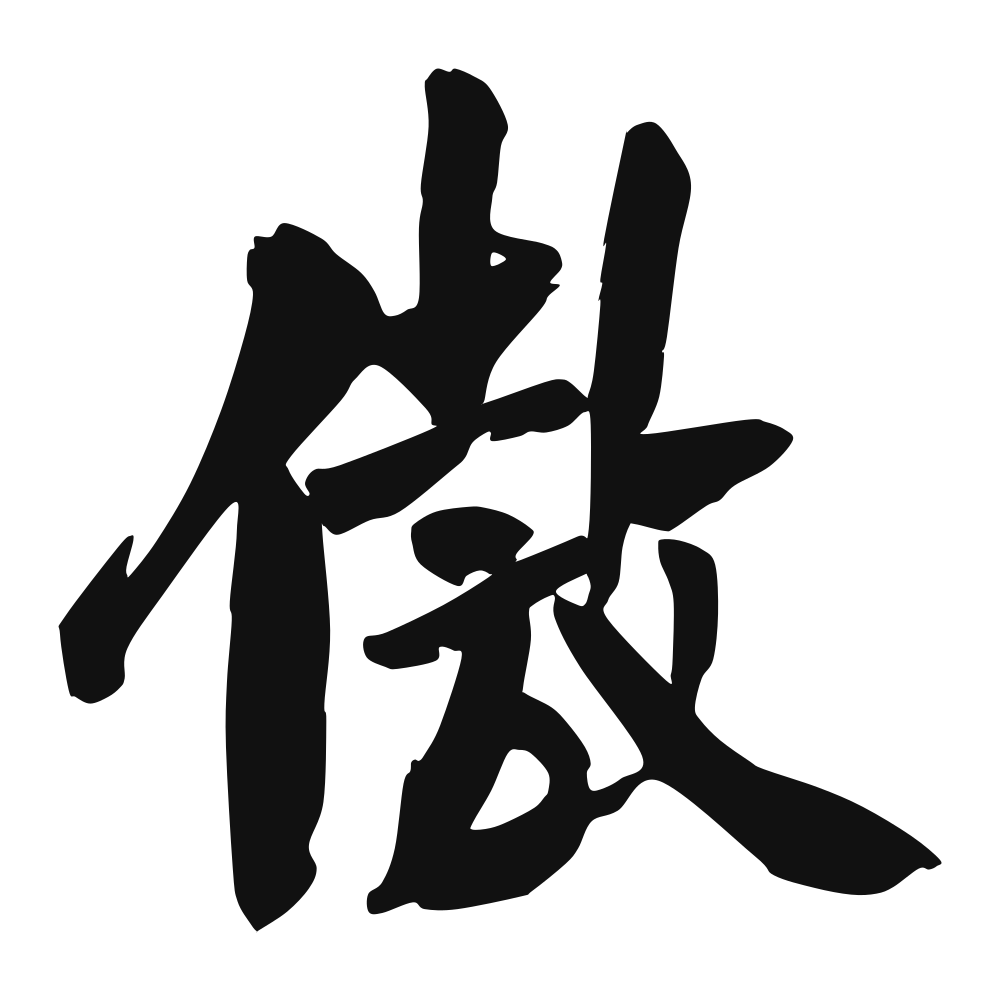
傲
proud; arrogant; to despise; unyielding; to defy
Closest English meanings
proud·haughty
The Calligrapher — Bó Shàozhī 薄绍之
Liu Song calligrapher paired with Yang Xin as 'Yang-Bo', famed for running and cursive script
南朝宋 calligrapher (), master of running script — known for 与羊欣并称. Liu Song dynasty (Southern Dynasties)
Cultural Story
Tao Yuanming quit his post rather than bow to a petty inspector for the sake of five pecks of rice — 不为五斗米折腰. That refusal is the classic instance of 傲骨, a pride that would not bend. The word 傲 thus named the spine of the independent man, his haughtiness a virtue when the world demanded a cringe.
Common words & phrases
- 骄傲 proud · arrogant · pride
- 傲慢 arrogant · haughty
- 傲气 haughtiness
- 傲骨 lofty character
- 孤傲 proud and aloof
Read the story behind the character
A graduate is 傲慢 in the interview and loses the offer; the brand wears its 傲气 like a logo. A critic admires the painter's 傲骨, and a neighbour is called 孤傲 for keeping to himself. The word still marks the proud — the tilt of the chin that reads as confidence to some and contempt to others, in the room or online.
Why this character belongs on skin
傲 is pride with its spine straight — the self-respect that doesn't beg for permission. They called our elders 傲 as an insult, too proud, too much, but pride was the only thing that kept them alive. 傲 is the chin you lift when they misgender you and you correct them anyway. It is the chosen family gathered at the table, refusing shame as a language. To be 傲 is not arrogance; it is the refusal to apologize for existing in full color. The world taught you smallness, and 傲 is the quiet revolt against it. Carry this character where your own eyes land. A reminder that you owe the world nothing softer than your truth. Stand proud. The ink is just the outline of a dignity already yours, already earned.
Own this character
Purchase delivers the original SVG of this glyph, brushed by Bó Shàozhī 薄绍之, ready to place on skin, paper, or screen.