
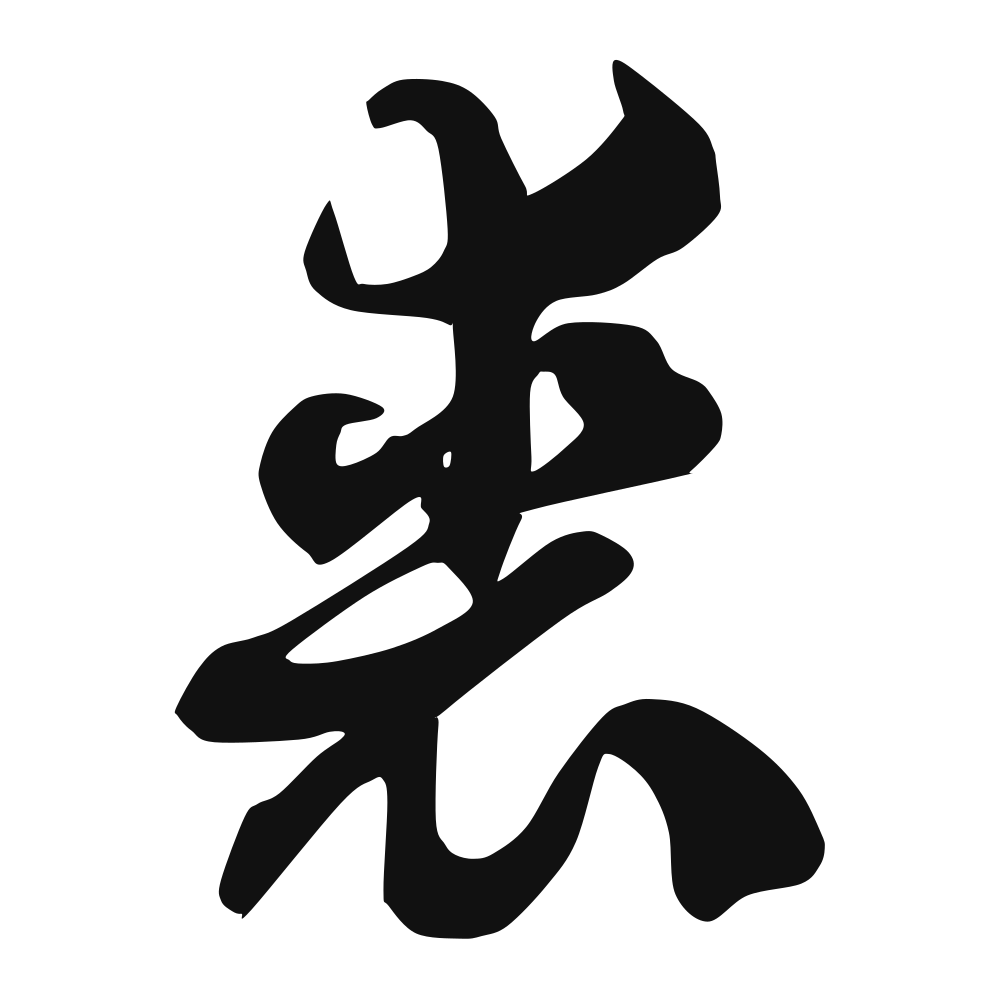
裘
surname Qiu; fur; fur coat
Closest English meanings
fur coat
The Calligrapher — Wèi Guàn 卫瓘
Wei calligrapher with Suo Jing as 'Two Wonders' of cursive; made willow-leaf seal script
三国魏 calligrapher (), master of cursive script/柳叶篆 — known for 与索靖并称二妙. Wei kingdom (Three Kingdoms)
Cultural Story
The Analects describes Zihua dispatched to Qi as riding a fat horse and wearing a light fur, yi qing qiu, the qiu the soft coat that marked a man comfortably placed. The fur was the weather-proof luxury of the official class, light enough to ride in. The character is the winter wealth worn on the shoulders.
Common words & phrases
- 皮裘 fur coat
- 裘皮 fur
- 轻裘 light fur coat
Read the story behind the character
A shop sells a pi qiu fur coat for the northern winter, and a designer works with qiu pi, fur, trim on a collar. The word qing qiu, a light fur, names the elegant old ideal of warm-without-bulk. The character is the animal skin made into the garment that keeps the cold out and the status in.
Why this character belongs on skin
Winter in the old north was an argument, and 裘 was the winning reply—a fur coat, pelts sewn into warmth, the mark of both wealth and hardship survived. The character shows a hand over animal hide: intimacy with the cold's opposite. Confucius wore black lamb fur for ritual; the knight-errants of legend wore fox and gave it away; and the poorest shepherd wrapped in dog fur against a wind that killed the unprepared. Fur is the body's memory of being animal, turned outward—softness as armor, luxury as simple survival dressed well. To wear 裘 on skin is a rich irony, warmth rendered in ink rather than pelt. It whispers of furs slipped off in warm rooms, of what the cold taught you, of choosing what touches you.
Own this character
Purchase delivers the original SVG of this glyph, brushed by Wèi Guàn 卫瓘, ready to place on skin, paper, or screen.