
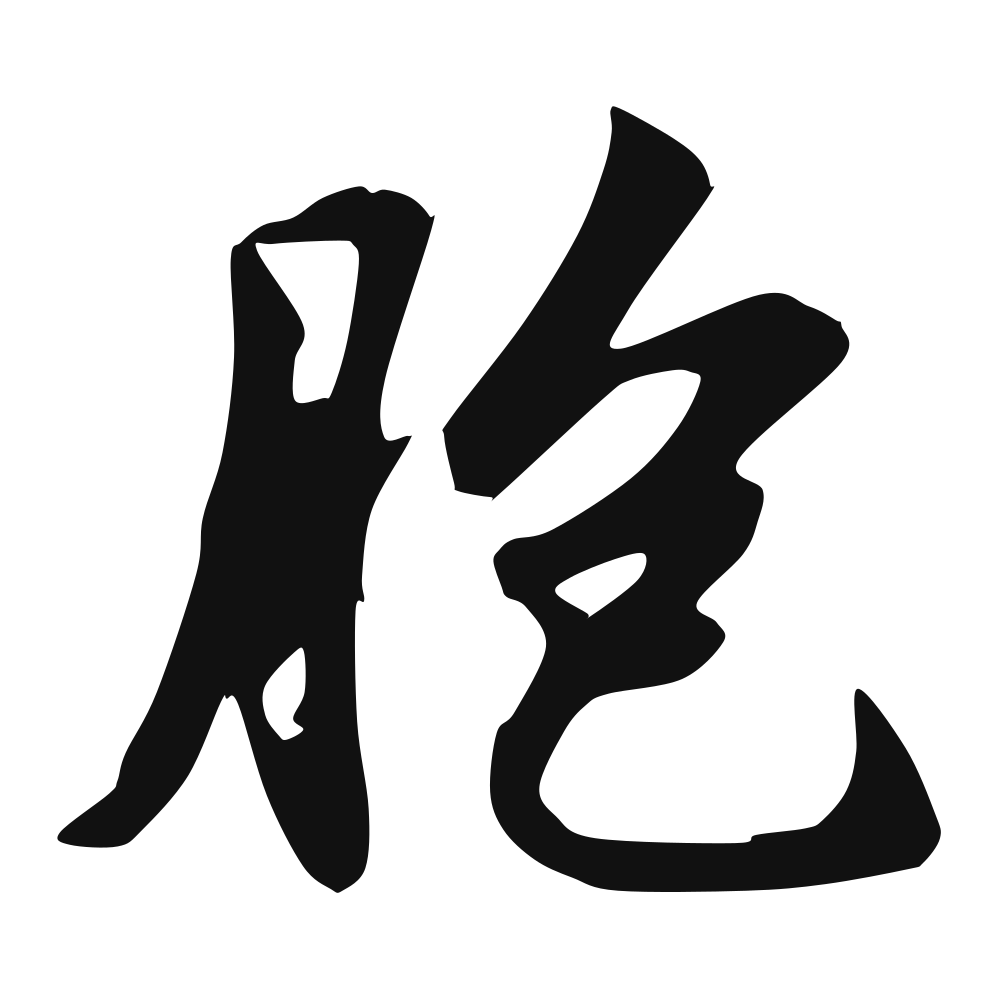
胞
placenta; womb; born of the same parents
Closest English meanings
womb·placenta·compatriot
The Calligrapher — Wèi Héng 卫恒
Jin calligrapher and theorist; author of the Four Script Forms and Their Force (Siti Shushi).
Jin calligrapher (), master of seal script/clerical script — known for 《四体书势》. Jin dynasty
Cultural Story
胞 is the womb, the placenta — hence all born of one mother. Classical society stretched the metaphor to the whole nation: compatriots within the four seas shared one womb of civilization. 兄弟同胞 meant brothers by the same parents, kinship measured in shared blood and shared rice.
Common words & phrases
- 同胞 compatriot · fellow countryman
- 细胞 cell
- 胞兄 elder brother by same parents
- 侨胞 overseas compatriot
Read the story behind the character
Biology class labels a 细胞 cell and its nucleus; a family reunion labels 胞兄 elder brother by the same parents. Overseas 侨胞 compatriots send donations after a flood, and official speeches speak of 同胞 compatriots across the strait. The character quietly argues that everyone came from somewhere shared.
Why this character belongs on skin
We begin in the same warm dark. 胞 is that beginning — the character for the womb, for the amniotic sac, and by extension for the cell and the sibling born of the same mother. The ancients called strangers 同胞, fellow womb-mates, to insist that all humanity shares one origin. There is a profound tenderness here, the recognition encoded in flesh that no one is truly other. Buddhist compassion flows from this same root: you are the mother, the stranger, the enemy, all at once. To carry 胞 is to wear your kinship like a creed. Ink it over the heart, a quiet oath: I am not separate. The body that holds me held you first, in the dark, without question. Let the mark say what words fumble — we are one tissue, one breath, and I will not forget it on my skin, nor pretend the boundary was ever real.
Own this character
Purchase delivers the original SVG of this glyph, brushed by Wèi Héng 卫恒, ready to place on skin, paper, or screen.