
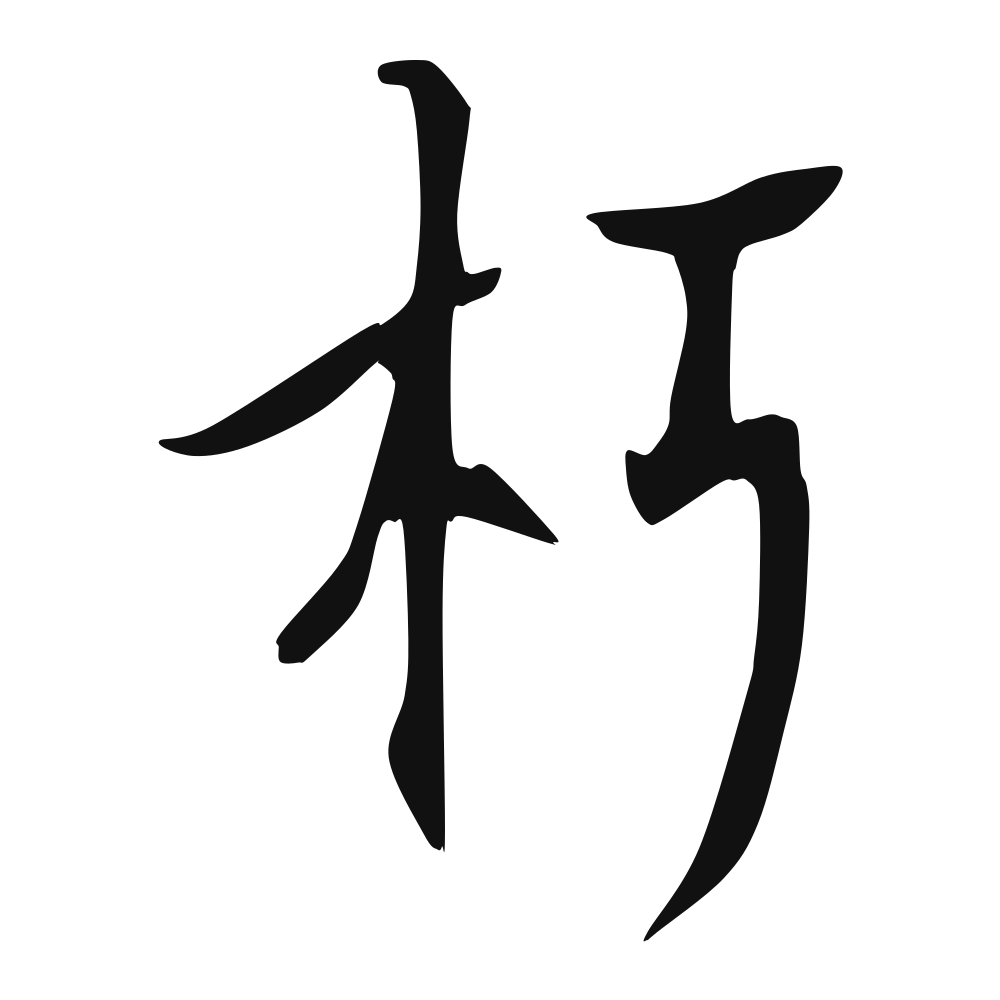
The Calligrapher — Wèi Qīwú 魏栖梧
Tang calligrapher of regular script, follower of the Chu Suiliang style.
Tang calligrapher (), master of regular script — known for 《善才寺碑》. Tang dynasty
Cultural Story
朽 is wood that has gone back to earth. Confucius, despairing of a hopeless student, sighed 朽木不可雕 — rotten wood cannot be carved. The phrase outlived every essay that earned it. 朽 names the natural sentence of timber and, by metaphor, of dynasties and men who have missed their season to be useful.
Common words & phrases
- 腐朽 rotten · decayed · corrupt
- 朽木 rotten wood
- 衰朽 decrepit · feeble
Read the story behind the character
朽 is mostly literary now, a word for what has given out: 腐朽 describes a corrupt system in a newspaper editorial; 衰朽 an old regime in a history book. You would not say it of last week's bread. The character lives in criticism and archaeology, the verdict passed on things too far gone to repair.
Why this character belongs on skin
Everything beautiful is also on its way to dust. 朽 is decay — the rotten wood that will not hold a nail, the body returning to the loam. The character joins tree and the word for evening, as if the long sunset of all living things were written into the grain. We flee this truth; the Buddhists sit with it, and call the sitting freedom. To ink 朽 is not morbidity but honesty, a refusal to pretend the flesh is permanent. It is the mark of someone who has watched something loved turn to ash and chosen still to love. On the skin it is a memento, not a curse — a quiet acknowledgment that the very brevity is what makes the touching matter. Carry it, and you carry the courage to hold what cannot last.
Own this character
Purchase delivers the original SVG of this glyph, brushed by Wèi Qīwú 魏栖梧, ready to place on skin, paper, or screen.