
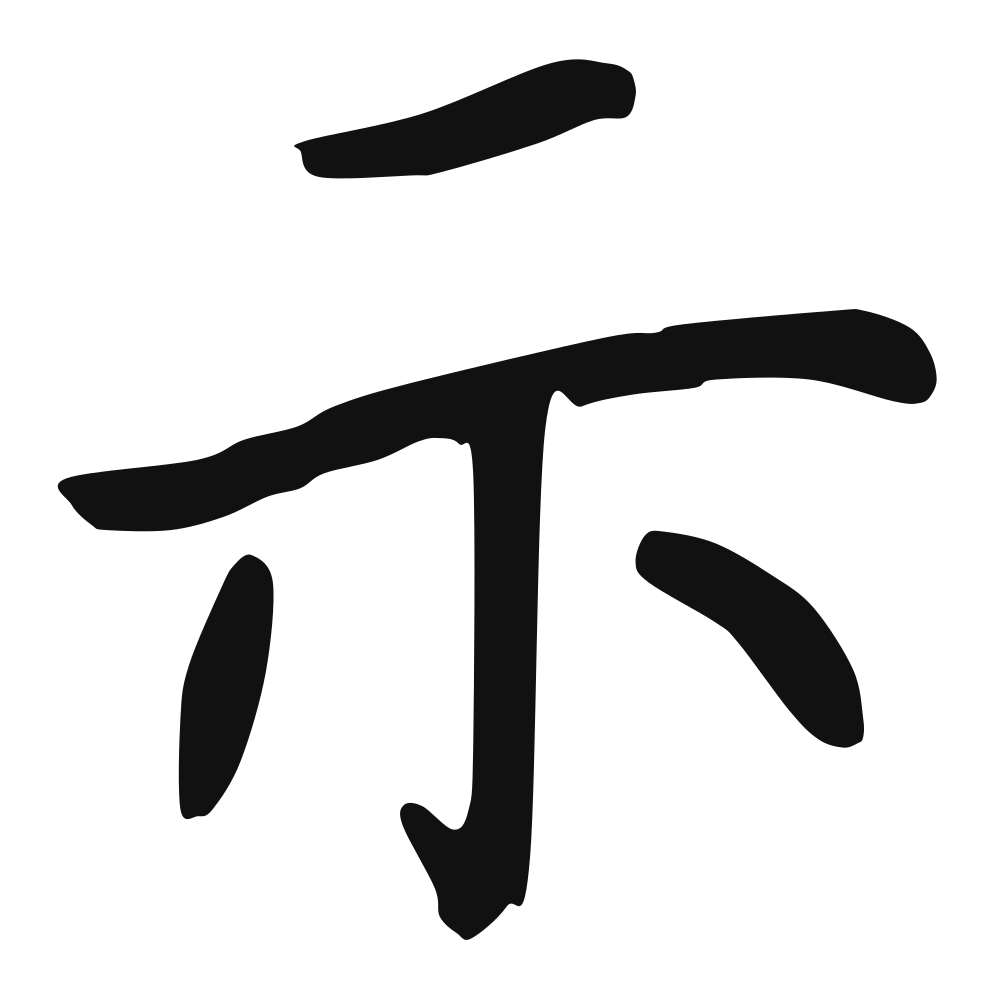
示
to show; to reveal
Closest English meanings
show·reveal·instruct
The Calligrapher — Wèi Qīwú 魏栖梧
Tang calligrapher of regular script, follower of the Chu Suiliang style.
Tang calligrapher (), master of regular script — known for 《善才寺碑》. Tang dynasty
Cultural Story
示 began as an altar: oracle-bone inscriptions draw a standing stone or tablet where offerings were set before the spirits. From “lay a matter before the gods” it came to mean making anything manifest — showing, revealing, instructing the living.
Common words & phrases
- 显示 display · show
- 表示 express · show
- 指示 indicate · instruct
- 示范 demonstrate
- 展示 exhibit · show
Read the story behind the character
Modern life runs on the verb: a phone 显示, displays, your messages; a pause 表示, signals, hesitation; a coach 指示, instructs, the next play; teachers 示范, demonstrate, the technique; and galleries 展示, showcase, new work to the public.
Why this character belongs on skin
示 is to show, to make visible what was hidden — but its oldest shape was an altar, a standing stone before which the spirits were revealed to men. The radical lives in every word of worship and omen. To wear 示 is to admit you are a seeker, that something beyond the surface has spoken to you and you answered. Revelation is sensual: the shiver when the veil lifts, the clarity that arrives like cold water. We spend our lives performing certainty; this mark says the opposite — I have seen something, and I am changed. Let it sit over the heart or the brow, where the showing happens. It does not preach. It simply declares that you have stood before the mystery and not looked away, that you carry the altar inside you now, small and burning.
Own this character
Purchase delivers the original SVG of this glyph, brushed by Wèi Qīwú 魏栖梧, ready to place on skin, paper, or screen.