
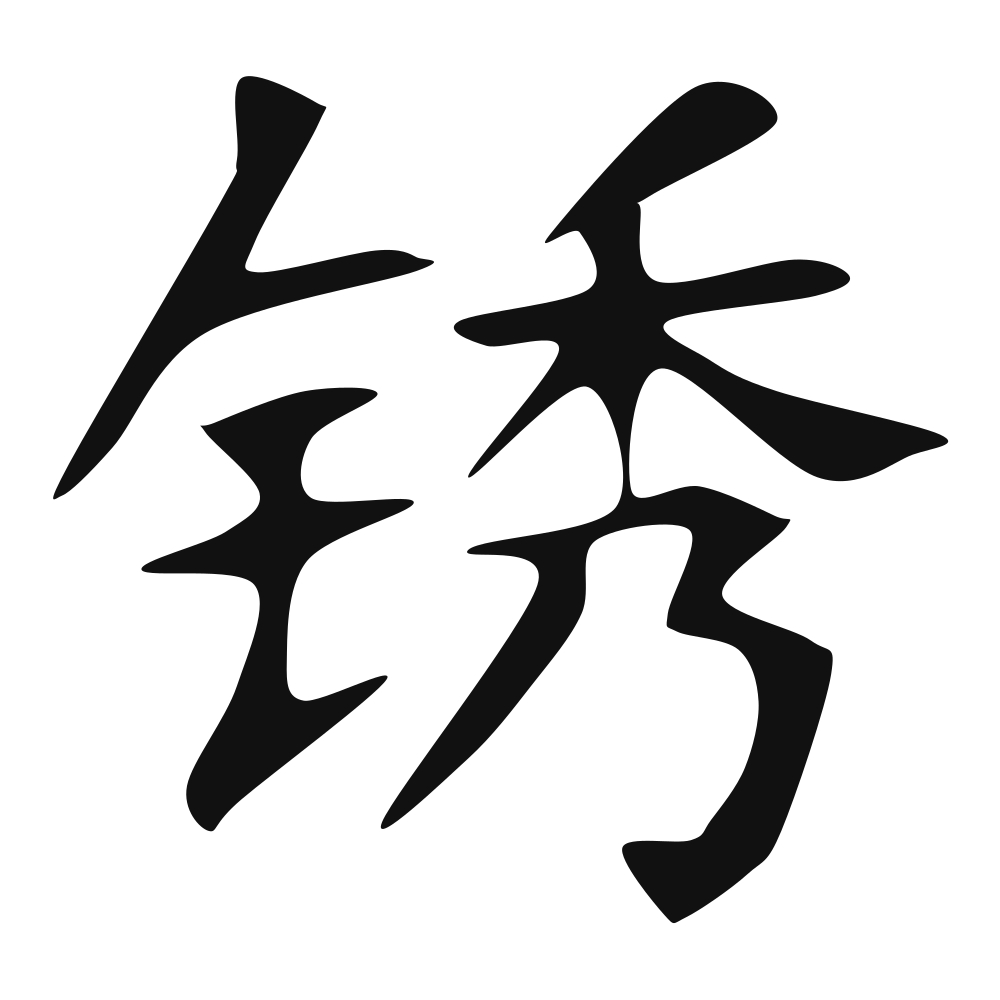
The Calligrapher — Wèi Qīwú 魏栖梧
Tang calligrapher of regular script, follower of the Chu Suiliang style.
Tang calligrapher (), master of regular script — known for 《善才寺碑》. Tang dynasty
Cultural Story
锈, rust, pairs metal with 秀 and names the reddish decay that blooms on iron left to weather. It is the slow victory of air and water over the forge, the creeping oxidation that, given time and neglect, returns the strongest blade to the earth.
Common words & phrases
- 生锈 rust · get rusty
- 铁锈 iron rust
- 锈蚀 corrode · rust
- 锈斑 rust stain
Read the story behind the character
Iron left in the rain will 生锈 and show 铁锈; over years it 锈蚀 until it crumbles. A 锈斑 stains an old tool. We also speak of a mind grown rusty—锈 as the forgetfulness that comes from disuse.
Why this character belongs on skin
Metal remembering time: 锈, rust—that red bloom of oxide where iron meets rain and air and years. The Japanese tea masters prized exactly this, a glaze called sabi, aged beauty that no new thing can fake. Rust is the truth no polish can outrun: everything that lives in the world gets weathered, and the weathering is a kind of writing. A tattoo of 锈 is a rare and knowing choice—most people ink what they want to be; you would ink what everything becomes. Not decay, quite. Patina. The difference between a ruin and a relic is only whether anyone loves it. Let it sit on the skin like a gardener's hands, a sailor's blade, a bridge gone copper in the sunset. Beautiful, precisely because it lasted.
Own this character
Purchase delivers the original SVG of this glyph, brushed by Wèi Qīwú 魏栖梧, ready to place on skin, paper, or screen.