
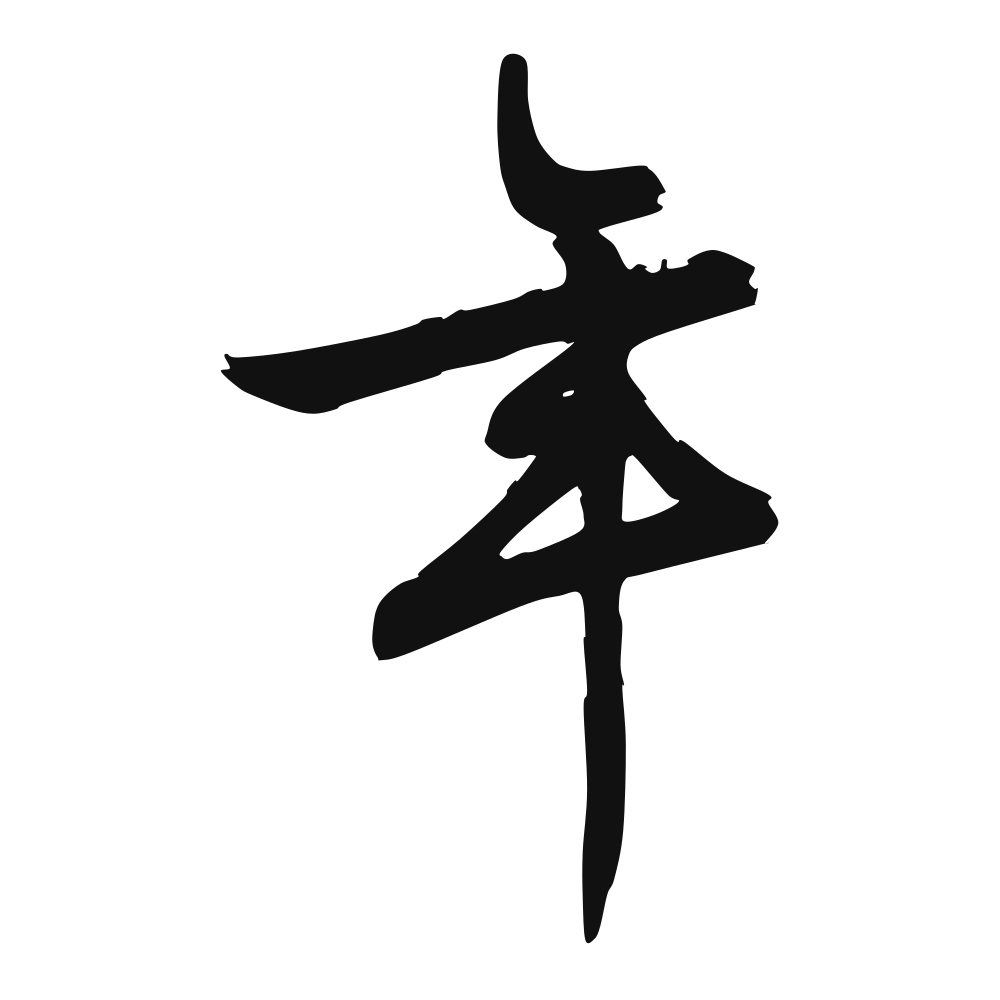
年
年 (nián) — year. Grain 禾 + 千: the ripe harvest, originally 'harvest'. Classical life: 年年有余 — may every year have surplus. Grammar: free morpheme — also: surname Nian; year; grain; harvest (old)
Closest English meanings
year·age·annual·harvest
The Calligrapher — Wén Zhēngmíng 文徵明
Ming literati master of refined regular and running script.
Ming calligrapher (1470–1559), master of running script/regular script/cursive script — Ming master of refined regular and running script who kept improving into his nineties. Ming dynasty
Etymology & Meaning · 字义溯源
2 · The Character: 年 Nián (2nd tone). Shuowen Jiezi (卷七, 禾部) defines 年 as 穀孰也 — 'the grain ripens' — written 从禾千聲, a stalk bending under its own weight. A 'year' in early China was therefore one harvest rather than an abstract orbit: 《穀梁傳·桓公三年》 states 五穀皆熟為有年也, 'when all five grains ripen, that is a year', and 《春秋·宣公十六年》 records simply 大有年, 'a great harvest year'. 《詩·周頌·豐年》 opens 豐年多黍多稌 — 'in the plentiful year, much millet, much rice'. 《禮記·王制》 uses 引年 for reckoning the age of elders. Wang Xizhi dates the Lanting Preface with exactly this word: 永和九年,歲在癸丑. Kangxi counts six strokes. 年 is a free morpheme and stands alone. Honest disclosure: it reads as 'year' or 'age', not 'eternity' — a Chinese reader expects 壽 for longevity. It is also the everyday word in 過年 (Lunar New Year), so the character lands warmer and plainer than English 'time'.
Cultural Story
年 shows a person carrying a sheaf of grain (禾), and the Shuowen says '年 is the ripening of grain' - the harvest that once measured time. A good 年 meant full barns; the Odes sang of 丰年, abundant years. The Shang counted 年 as the cycle of one crop, and festivals like 春节 still mark the turning. So the year was never abstract: it was the golden weight of grain a community had earned together.
Where a Western reader can stand: Where a Western reader can stand: 'a year' — one ripening of grain. Wen Zhengming's scholarly running script keeps it with patient grace. Honest caveat: 年 means 'year / age', not 'eternity' (壽) — not a longevity charm; it is the word of New Year prints (年画).
Energy Reading
Earth (土)
Comparative symbology, not fortune-telling.
Common words & phrases
- 今年 this year · the current year · this year's
- 年轻 young · youthful · juvenile
- 去年 last year · previous year · the past year
- 年代 era · age · decade · period
- 童年 childhood · infancy · early years
- 年岁 years · age · time of life
Read the story behind the character
You say 今年, this year, and remember being 年轻, young, not long ago; 去年, last year, feels close. Each 年代, each era, has its songs, and your 童年, childhood, lives in old photos. Grandma counts her 年岁, her years, with a smile. From the harvest sheaf to a birthday cake, 年 still measures the time a life and a field have grown through together.
Why this character belongs on skin
The year was once a thing you could taste. Before calendars, there was the grain ripening, the harvest gathered, the long exhale of a community that had, again, not died. 年 is that turning — the season coming round, the New Year with its red doors and its forgiveness. Its old form showed a man carrying grain home, the yearly accounting of survival made visible. We have flattened it into a number ticking on a screen, but the root is warmer: the year as something you harvest, not merely endure. To carry 年 is to reclaim time as abundance. It is the tattoo for the one who measures life in what was gathered rather than what was lost, who meets each January as a field to be filled. Let it mark you as a person who intends to reap.
Own this character
Purchase delivers the original SVG of this glyph, brushed by Wén Zhēngmíng 文徵明, ready to place on skin, paper, or screen.