
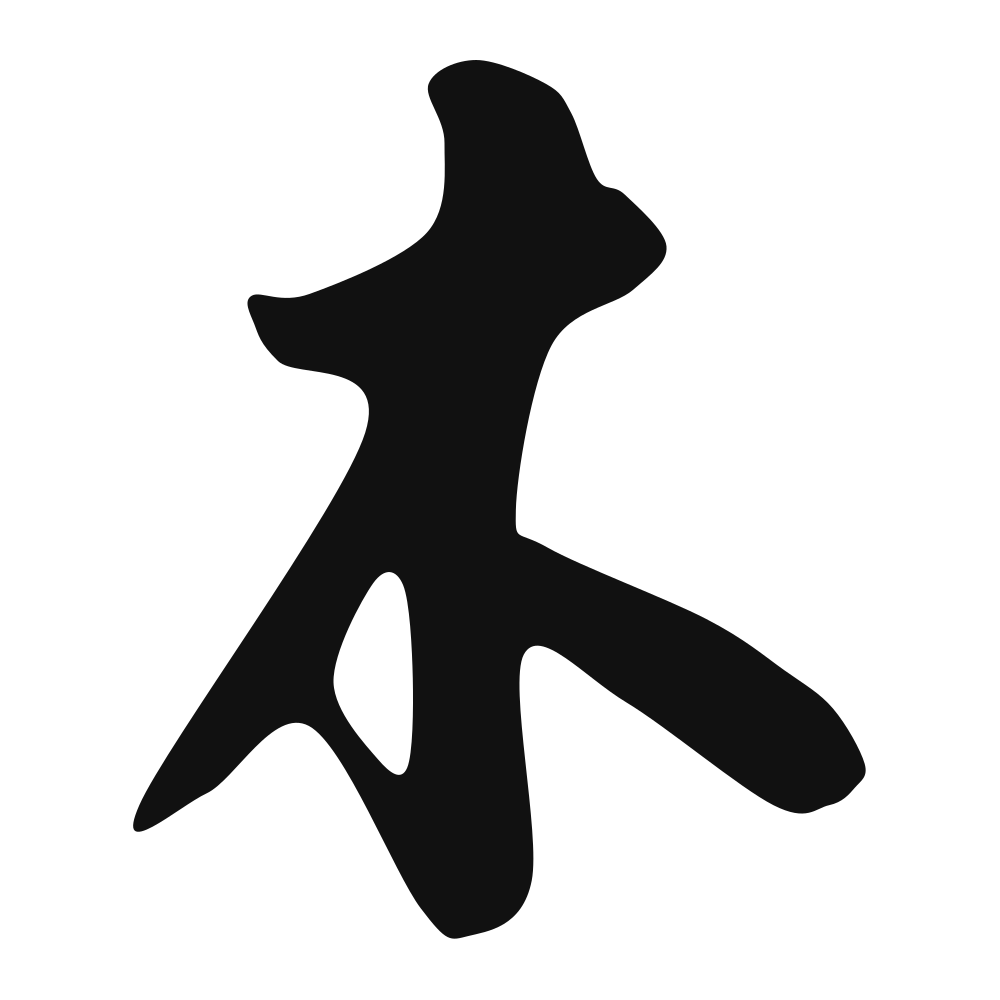
木
surname Mu; (bound form) tree; (bound form) wood; unresponsive; numb; wooden
Closest English meanings
wood·tree·timber·lumber·log
The Calligrapher — Wēng Tónggē 翁同龢
Qing imperial tutor renowned for robust regular and running script.
Qing calligrapher (), master of running script — known for 同治、光绪帝师. Qing dynasty
Cultural Story
木 is a pictograph: a trunk with branches and roots, the simplest drawing of a tree. The 論語 praises 木讷, the slow, plainly spoken man, as near to virtue. Confucius' own coffin was plain 木. In landscape painting the bare 木 frames winter; in carpentry it is everything. The character is the ancestor of a whole forest of words.
Common words & phrases
- 树木 tree · trees · vegetation
- 木头 wood · log · timber
- 木马 wooden horse · rocking horse · Trojan horse
- 木工 carpenter · woodwork · joinery
- 木耳 wood ear fungus · black fungus · cloud ear
Read the story behind the character
木 is everywhere you look in a Chinese city: 木头 in a chair leg, 木工 the man who fixes it, 木耳 the wrinkled fungus in a hotpot. 木马 is a child's rocking horse and, to an IT worker, a malicious program hiding in the system. The character names both the solid timber and, oddly, the ghost in the machine.
Why this character belongs on skin
木 is the tree, drawn plainly — a trunk, two arms of branch, roots hidden below. It is the most honest character in the language, a picture of life that asks nothing and gives shade. Wood bends but does not break easily; it burns, it builds, it returns to the earth without complaint. The Daoist loves 木 because it does not strive — it simply stands through wind, snow, drought, and the long green forgiveness of another spring. To wear it is to choose the patient way. You will not be the loudest thing in the room. You will be the thing still standing when the loud ones have gone. Ink a single 木 where only you know, and let it remind you: grow slowly, root deeply, and trust the seasons to do their quiet, merciless, generous work.
Own this character
Purchase delivers the original SVG of this glyph, brushed by Wēng Tónggē 翁同龢, ready to place on skin, paper, or screen.