
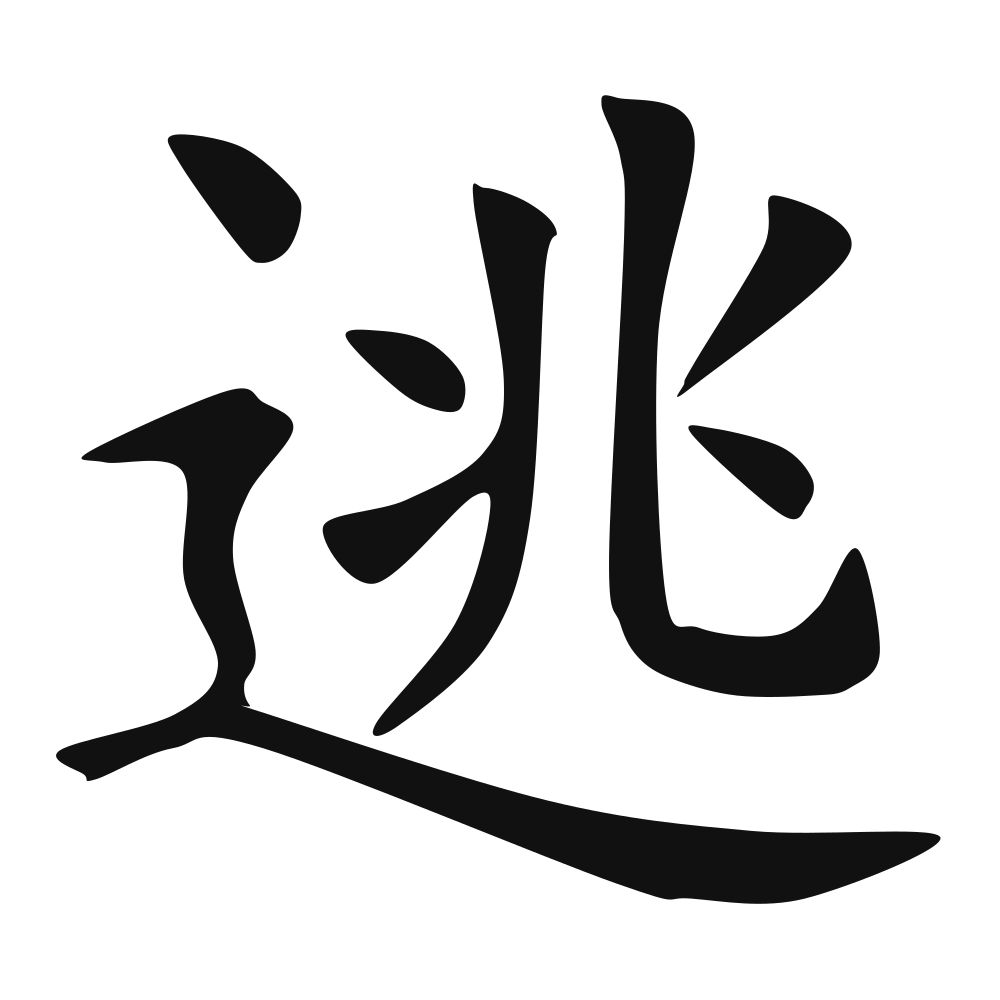
逃
to escape; to run away; to flee
Closest English meanings
flee·escape·run away
The Calligrapher — Wǔ Zétiān 武则天
Tang empress who wrote the Shengxian Taizi Stele, the first cursive-script stele by a woman.
Tang calligrapher (), master of cursive script — known for 《升仙太子碑》. Tang dynasty
Cultural Story
Tao is flight — feet leaving danger behind. Zuo zhuan's chronicles of exiled lords and broken armies made tao the historian's word for whoever slipped away alive, shame and survival bound together.
Common words & phrases
- 逃跑 run away · flee
- 逃避 escape · evade
- 逃脱 escape
- 逃走 flee
- 逃犯 fugitive
Read the story behind the character
Tao thrives in modern drama: taopao (flee) the burning building in the drill, taobi (avoid) the hard conversation, taotuo (escape) a toxic job, taofan (fugitive) chased across three provinces in the crime drama. Less dramatic but real: escaping into overtime, into scrolling — the mild escapes we rehearse nightly.
Why this character belongs on skin
Sometimes the bravest thing is the turning of your back. 逃 is that turning — the character for flight, for slipping the noose of a life that was killing you. The Daoist sage disappears into the mountains not from cowardice but from wisdom; he knows when the court is rotten and the only honor left is leaving. To flee can be the first act of self-respect. There is a rush in it, the breathless joy of the open road at dawn, the weight lifting off the chest. To carry 逃 is to honor the escape that saved you, the night you walked out and did not look back. Ink it where it hides, a secret talisman: I got free. Not everyone understands, and that is fine. The mark is yours, the proof that you chose yourself over the cage, and would do it again, and again, for as long as the ink stays warm.
Own this character
Purchase delivers the original SVG of this glyph, brushed by Wǔ Zétiān 武则天, ready to place on skin, paper, or screen.