
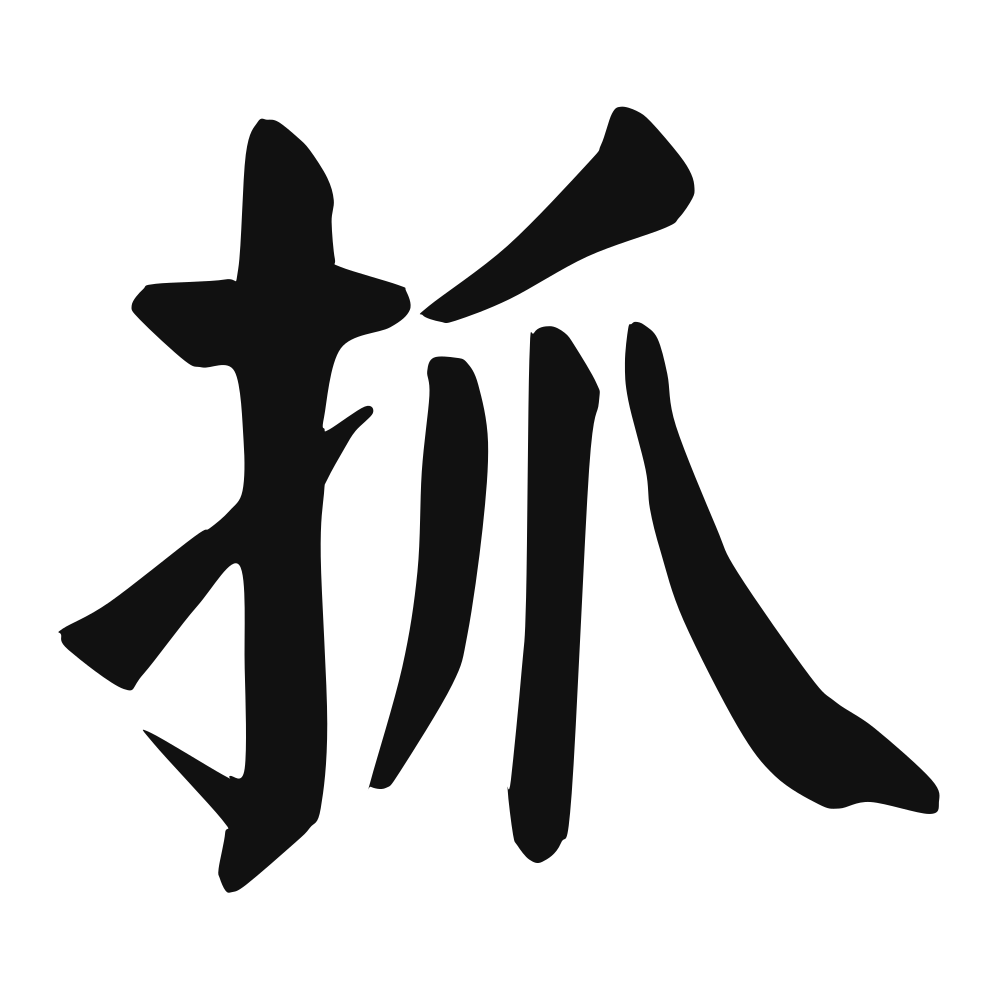
抓
to grab; to catch; to arrest; to snatch; to scratch
Closest English meanings
grab·scratch·arrest
The Calligrapher — Xiè Língyùn 谢灵运
Liu Song poet-calligrapher of cursive script whose works were imperial 'two treasures'.
南朝宋 calligrapher (), master of cursive script/running script — known for 诗书兼擅. Liu Song dynasty (Southern Dynasties)
Cultural Story
抓 is a late, clawing word — to grab, to scratch, to arrest. The classics used 擒 and 搔; 抓 came up from the street for the sudden hold. The hand with 爪, a claw, is the snatch that takes. It is the grab and the scratch, the seizure made bodily.
Common words & phrases
- 抓住 grasp · seize
- 抓紧 grasp firmly
- 抓药 fill a prescription
- 抓瞎 be at a loss
Read the story behind the character
抓 is the urgent verb: 抓住 the rail, 抓紧 the deadline, 抓药 the prescription the clerk fills, 抓瞎 the fluster of being unprepared. It names the snatch that secures and the panic of the empty hand, the grasp and the groping, often before the fall.
Why this character belongs on skin
Some moments must be taken with both hands. 抓 is the grab—the claw that seizes, the scratch that leaves a mark, the hand that will not miss its chance. It is urgency made physical, the instinct to close on what matters before it slips away. We hesitate, and the thing is gone; 抓 is the antidote to hesitation, the body deciding faster than the doubt. To wear this character is to honor your grasping life, the part that reaches without apology. A tattoo of 抓 is not gentle—it is the scratch on the record of who you are, proof you touched something hard enough to leave a line. Carry it as a reminder that some joys are seized, not given, that love and luck favor the hand that closes. The West waits; 抓 grabs. Wear it for the scratch you earned, the mark of a person who reached and, for once, did not let go.
Own this character
Purchase delivers the original SVG of this glyph, brushed by Xiè Língyùn 谢灵运, ready to place on skin, paper, or screen.