
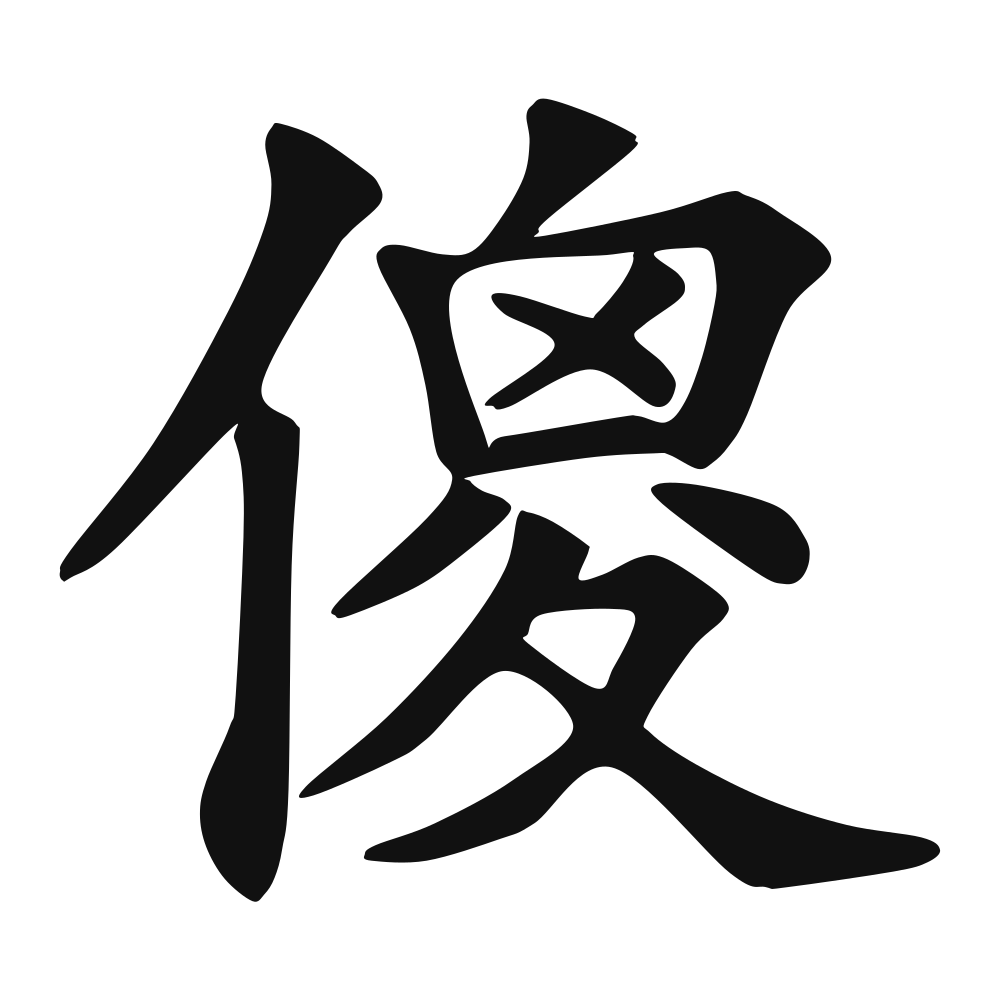
The Calligrapher — Yà Qī 亚栖
Tang monk calligrapher of cursive script, heir to Zhang Xu's manner.
Tang calligrapher (), master of cursive script — known for 禅僧书家. Tang dynasty
Cultural Story
The "Dream of the Red Chamber" gives us 傻大姐, the simple maid who stumbles on the embroidered pouch and, not understanding, carries ruin into the garden. Her 傻 is innocence without guile, the comic bluntness that opens the plot. The character is a late, vernacular one; it marks the fool the novel needs to set its tragedy in motion.
Common words & phrases
- 傻瓜 fool
- 傻笑 silly laugh
- 装傻 play dumb
- 傻子 fool
- 发傻 act silly
Read the story behind the character
A child 傻笑 at the screen; a friend 装傻 to dodge the question. The app calls him a 傻瓜 in jest, and the room 发傻 after the long joke. The word still means the foolish — the laugh without reason, the act of playing dumb — the small silliness that breaks tension or, sometimes, hides what a person would rather not say.
Why this character belongs on skin
The fool in Chinese has a paradoxical dignity. 傻 means silly, foolish, naive—and yet in the mouth of someone humble, it becomes armor: 傻人 has no pretense to defend. There is the fool of Zen who asks the question everyone is too clever to ask, and the holy fool of the West, Saint Francis giving away his coat in winter. Zhuangzi laughed at the clever ones rowing hard against the current while the fool floats and passes them. To be a little 傻 is to be spendable, open, unarmored—dangerous and alive. The English say fools' names appear in strange places, and the Chinese agree with their own blessing: 傻福, foolish luck—the good fortune that finds exactly the person too open to guard against it. This is a tattoo with a wink in it: for the lover who gives too much, and has never once regretted the interest rate.
Own this character
Purchase delivers the original SVG of this glyph, brushed by Yà Qī 亚栖, ready to place on skin, paper, or screen.