
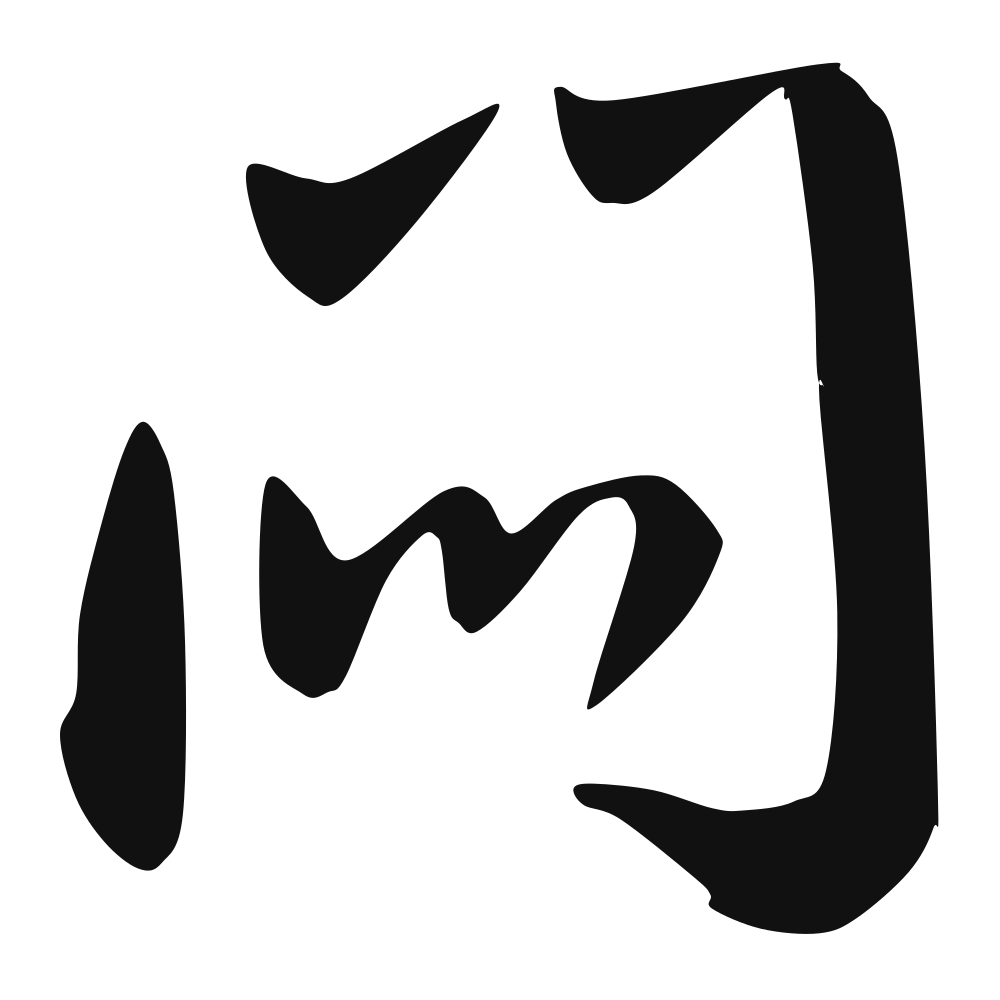
闷
stuffy; shut indoors; to smother; to cover tightly; bored; depressed; melancholy; sealed; airtight; tightly closed
Closest English meanings
bored·stuffy·depressed
The Calligrapher — Chéng Miǎo 程邈
Qin official credited with systematizing clerical script (lishu), a pivotal step in Chinese writing.
Qin-Han calligrapher (生卒年不详(秦)), master of clerical script — known for 隶书(相传整理八分). Qin–Han era
Cultural Story
闷 traps a heart 心 behind a closed gate 門, the feeling of being shut in with no outlet. It means stuffy, bored, or depressed, a mood that cannot breathe. The character makes a small psychology of architecture: close the door on the heart and unease gathers, whether from bad air or a heavier, inward weight.
Common words & phrases
- 闷热 hot and stuffy
- 沉闷 dull · depressed
- 苦闷 depressed · melancholy
- 烦闷 vexed · melancholy
- 闷闷 depressed
Read the story behind the character
Summer brings 闷热, hot and stuffy air that sticks to the skin, while a 沉闷 meeting is dull and oppressive. People feel 苦闷 or 烦闷, depressed and vexed by life's pressures, and a 闷闷 mood is one sunk low. 闷 turns a physical stuffiness and an emotional one into the same image, the heart behind a door with no wind to lift it.
Why this character belongs on skin
There is a room inside you where the heart has been shut behind a gate, and the air has gone still and warm with everything you did not say. 闷 is that enclosure—the heart, 心, locked within the door, 门. It is not mere boredom; it is the heavy weather of a feeling with no exit. Confucius warned that an unexamined grief festers; the Buddhists name it the weight we carry until we turn the latch. But a mark of 闷 is not a confession of suffering—it is the honest shape of being human, the dark room you survived. Wear it where only you can see, or where the world can, as quiet defiance: I felt the pressure and did not break. Let it sit on your skin like a closed door, and know that somewhere behind it, the heart still beats, waiting for you to open it.
Own this character
Purchase delivers the original SVG of this glyph, brushed by Chéng Miǎo 程邈, ready to place on skin, paper, or screen.