
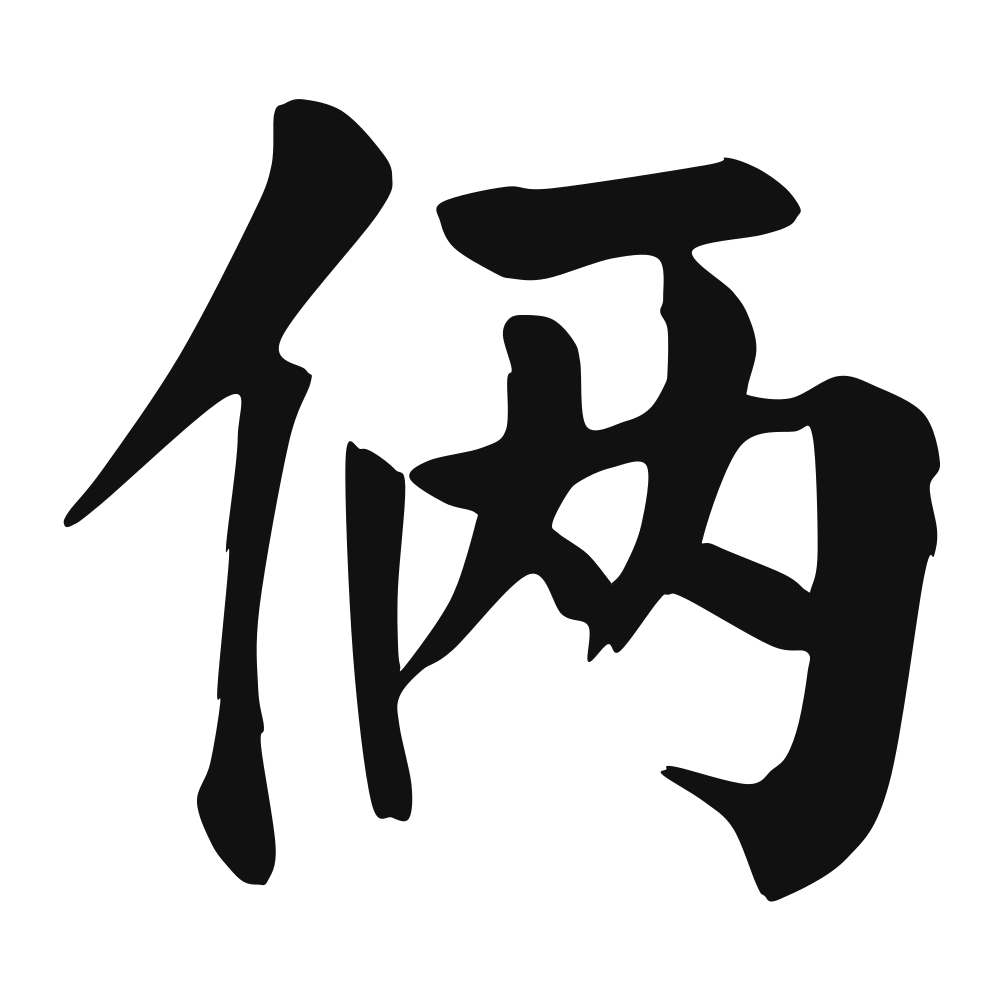
俩
two (colloquial equivalent of 兩個|两个); both; some
Closest English meanings
two·both·a couple
The Calligrapher — Yán Zhēnqīng 颜真卿
Tang master of robust regular script; co-creator of the enduring 'Yan style'.
Tang calligrapher (709–784), master of regular script/running script — the Tang moral paragon whose upright, muscular regular script became the model of Chinese integrity in writing. Tang dynasty
Cultural Story
俩 is two together. The north says 哥俩 for two brothers who share a room; 俩人 is simply the pair at the table. The character packs "two" and "person" into one mouth. To write 俩 is to name the small couple without counting them out.
Common words & phrases
- 哥俩 two brothers · the two of us
- 俩人 two people
Read the story behind the character
A text reads 哥俩 meet the station; the 俩人 split the bill without a word. The word fits the small pair — two brothers, two friends, the two of us. Quick and spoken, it marks the unit of two wherever people move as a set, from the dinner table to the drive home.
Why this character belongs on skin
Two is the first mystery. One is lonely certainty; three is crowd and noise. But two—two is the whole arithmetic of intimacy, the pair of hands that learn each other, the couple who walk home under one umbrella though the rain is theirs alone. 俩 means precisely this: the two of them, both, a couple bound by being counted together. The Dao breathes in pairs—light and shadow, mountain and valley—and refuses to choose between them. To wear this mark is to name someone without naming them, to carry a quiet witness on your skin: that you were never meant to be the only one. Some marks are for the world. This one is for the other half of your breath. Let it rest near your heart, a small account of two, the sum that made you more than yourself.
Own this character
Purchase delivers the original SVG of this glyph, brushed by Yán Zhēnqīng 颜真卿, ready to place on skin, paper, or screen.