
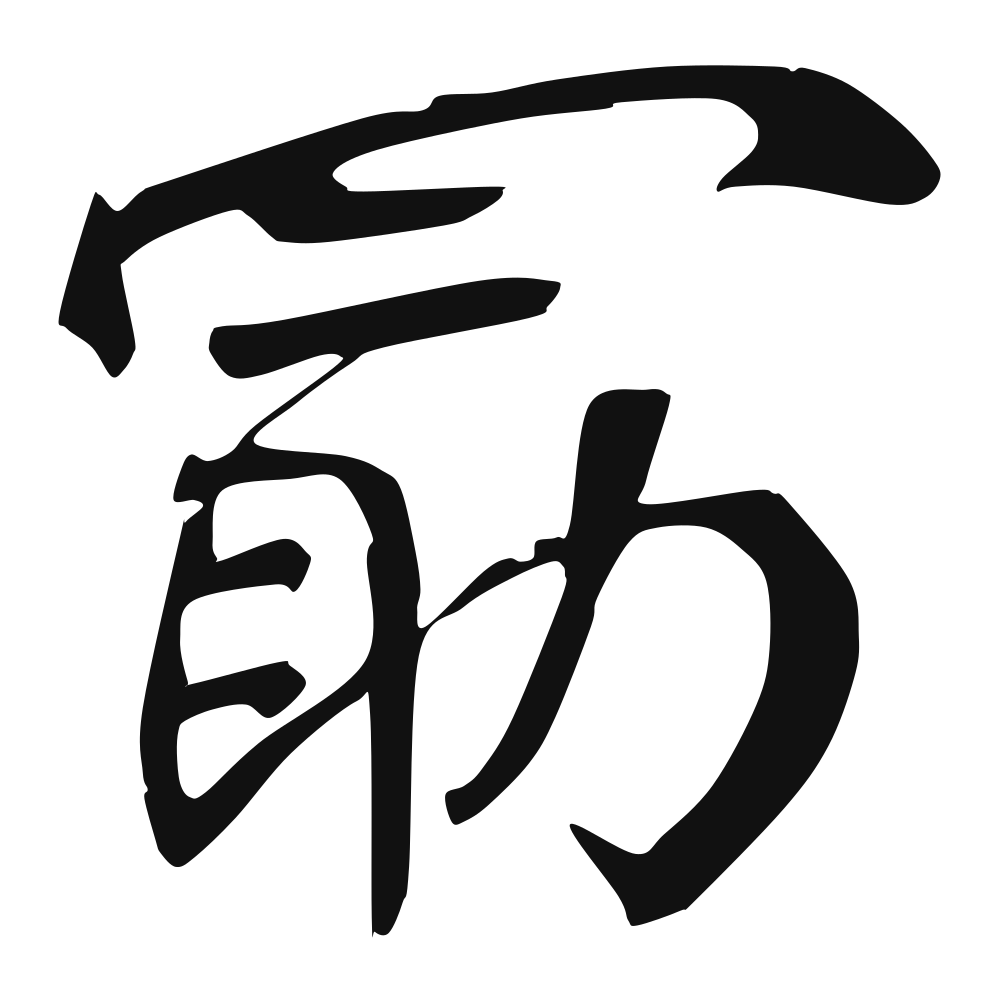
The Calligrapher — Yán Zhēnqīng 颜真卿
Tang master of robust regular script; co-creator of the enduring 'Yan style'.
Tang calligrapher (709–784), master of regular script/running script — the Tang moral paragon whose upright, muscular regular script became the model of Chinese integrity in writing. Tang dynasty
Cultural Story
Before the battle of Muye, the Documents of Zhou put a cry on King Wu's lips: “勖哟夫子” — “on, my men!” — urging his troops into the founding war of the Zhou. The word survives almost only paired, as 勖勉, in speeches and inscriptions. Few characters carry so old a battle shout into so quiet a corner of the language.
Common words & phrases
- 勖勉 encourage · exhort
Read the story behind the character
A university president's commencement address ends with 勖勉, a word no one uses at the bus stop. It appears on the plaque a company gifts a retiring director and in the closing line of a formal citation. Online, a rare poster signs off with it, and a subtitle translates it simply as “keep at it.” The charge has outlived the army that first heard it.
Why this character belongs on skin
Pressure, then motion. This character is built from the radical for strength — a hand of muscle set beside an older sign, the whole thing meaning to exhort, to rouse, to drive a willing heart forward. It appears in classical letters between teachers and students, fathers and sons: onward, I urge you. Not command. Something more intimate — the word of someone who has seen you falter and believes in you anyway, spoken so it can be read again on the worst mornings. The warrior codes knew this fuel: the general before battle does not scream; he reminds each man what he already wanted to become. The Stoics called it the inner spur. To wear this character over your ribs is to agree to be your own voice at dawn — the low, stubborn one that says rise. Not because the day deserves you. Because you said you would.
Own this character
Purchase delivers the original SVG of this glyph, brushed by Yán Zhēnqīng 颜真卿, ready to place on skin, paper, or screen.