
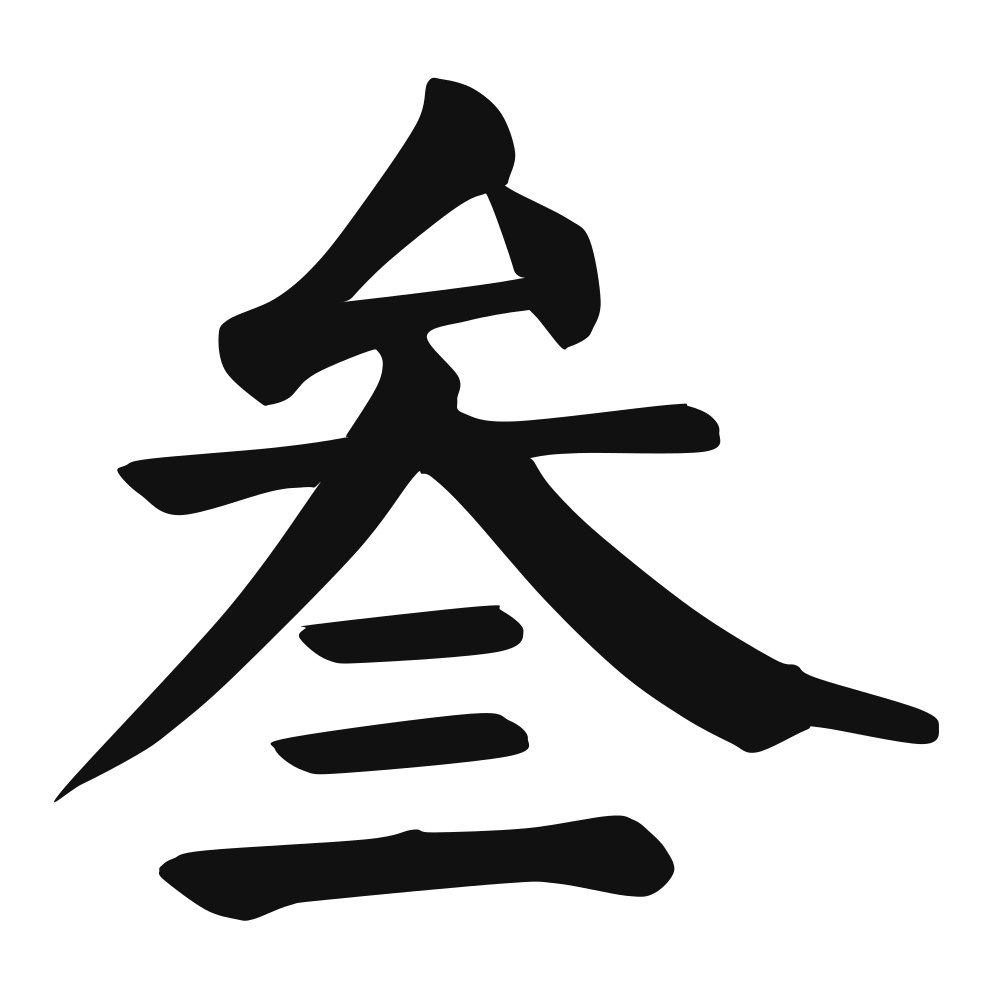
叁
three (banker's anti-fraud numeral)
Closest English meanings
three·three (capital form)
The Calligrapher — Yán Zhēnqīng 颜真卿
Tang master of robust regular script; co-creator of the enduring 'Yan style'.
Tang calligrapher (709–784), master of regular script/running script — the Tang moral paragon whose upright, muscular regular script became the model of Chinese integrity in writing. Tang dynasty
Cultural Story
叁 is the formal, fraud-proof shape of three. On ledgers and contracts the court required the "capital forms" -- 壹贰叁肆 -- so a clerk could not alter a 三 into an 八. The practice is traced to the early Ming, after the Guo Huan case exposed fortunes lost to a changed stroke. The extra strokes were a lock on the number.
Common words & phrases
- 叁元 three yuan
- 叁拾 thirty
Read the story behind the character
A cashier writes 叁 on the deposit slip; a lease prints 叁拾 days and the tenant signs. In a bank the capital forms appear on the promissory note, never the plain 三. The word is the same count in a safer dress -- used wherever a figure must survive scrutiny. It meets the eye on checks, contracts, and the occasional formal invitation, stiff and unmistakable.
Own this character
Purchase delivers the original SVG of this glyph, brushed by Yán Zhēnqīng 颜真卿, ready to place on skin, paper, or screen.