
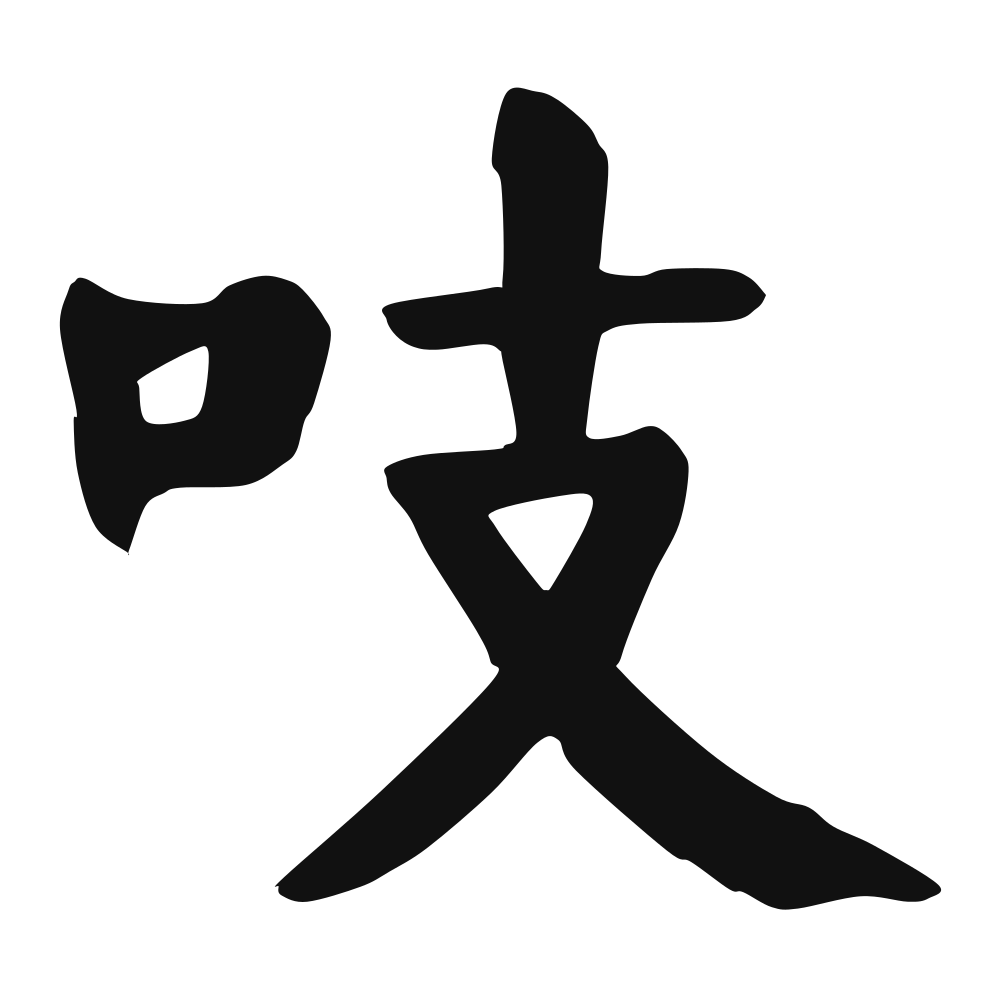
吱
(onom.) creaking or groaning; (onom.) chirp; squeak; creak
Closest English meanings
(onomatopoeia) creak·squeak
The Calligrapher — Yán Zhēnqīng 颜真卿
Tang master of robust regular script; co-creator of the enduring 'Yan style'.
Tang calligrapher (709–784), master of regular script/running script — the Tang moral paragon whose upright, muscular regular script became the model of Chinese integrity in writing. Tang dynasty
Cultural Story
吱 is onomatopoeic, the mouth radical 口 with 支 (a phonetic), imitating the creak of a hinge or the squeak of a mouse. Classical writing favored 吱 for small sounds of wood and creatures rather than human speech. A swinging gate 吱 in a courtyard, a field mouse 吱 in the wall—these tiny noises fill the quiet of old households, where wood, rope, and weather spoke in their own voices to those who listened.
Common words & phrases
- 吱吱 squeaking · creaking
- 吱声 make a sound · utter a word
- 咯吱 creak
Read the story behind the character
A rusty bicycle 吱吱 (squeaks) as a boy rides to school, and floorboards go 咯吱 (creak) when someone tiptoes in. Asked if he broke the vase, the boy won't 吱声 (make a sound/utter a word). Old chairs 咯吱 at the office, and a mouse 吱吱 behind the fridge. The character captures the small, telling sounds of modern rooms—the creaks and squeaks that give away a secret or a need for oil.
Own this character
Purchase delivers the original SVG of this glyph, brushed by Yán Zhēnqīng 颜真卿, ready to place on skin, paper, or screen.