
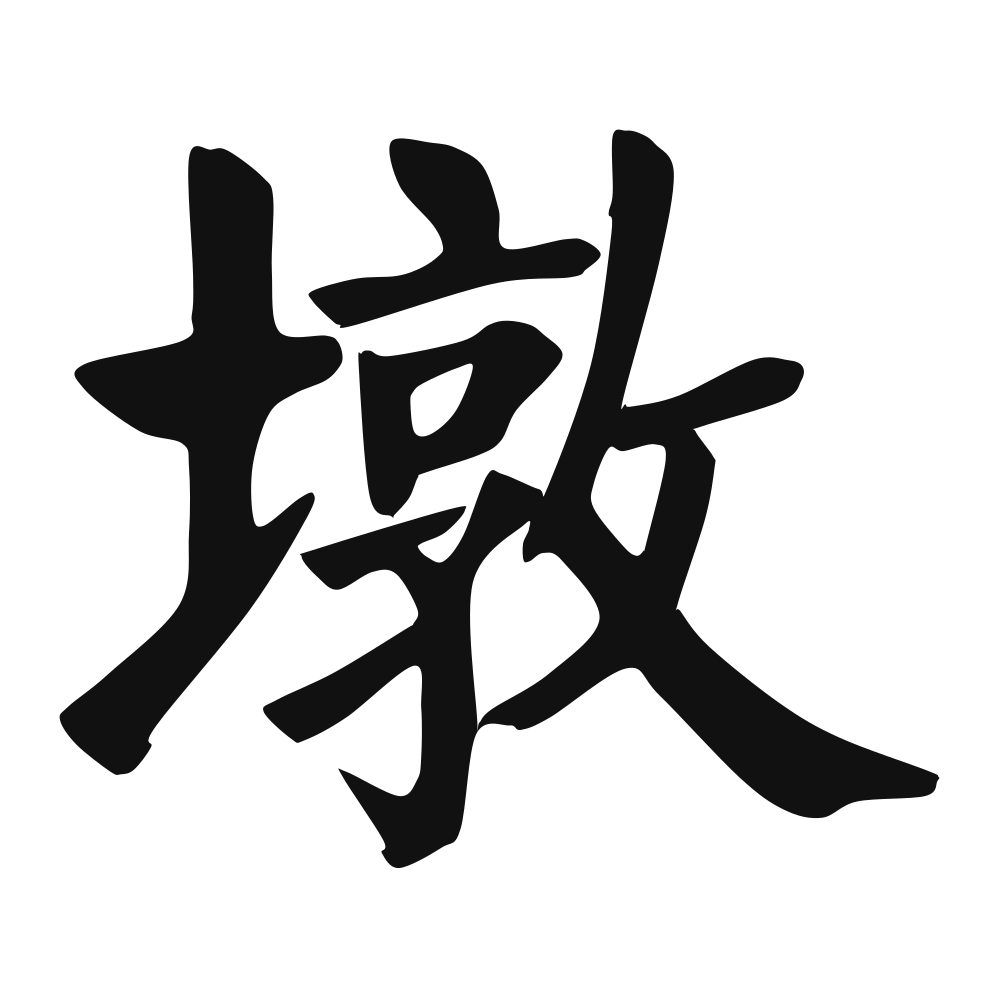
墩
block; gate pillar; pier; (archaic) watchtower
Closest English meanings
mound·block·pier
The Calligrapher — Yán Zhēnqīng 颜真卿
Tang master of robust regular script; co-creator of the enduring 'Yan style'.
Tang calligrapher (709–784), master of regular script/running script — the Tang moral paragon whose upright, muscular regular script became the model of Chinese integrity in writing. Tang dynasty
Cultural Story
墩 is a squat block or mound, low and built for load. The Ming 桥墩 (bridge piers) of the 卢沟桥 (Lugou Bridge) still stand, each carved with a lion; 土墩 are the burial mounds of the ancient 吴 (Wu) lands in the south. A 树墩 (tree stump) is what the axe leaves at the roots. The character is mass low to the ground, doing its work without height.
Common words & phrases
- 桥墩 bridge pier · pier
- 土墩 earth mound
- 树墩 tree stump · stool
Read the story behind the character
Crews pour 桥墩 (piers) for a new rail line with concrete trucks; a 树墩 becomes a garden stool after sanding. 土墩 mark old graves in the rice country of the south; a squat 墩 cushions a falling toddler in the playground. The word names the sturdy low thing — the support you never look at until, one day, it quietly fails.
Why this character belongs on skin
A low, stolid thing: the earth radical, the sound of something sunk and staying. A pier is this character — the stone knee in the river that the bridge rests upon, unmoved by current or gossip. Or a mound of earth, or the thick clay seat by a grandmother's stove, cool in summer, patient all year. Nothing about it glitters. That is its argument. A pier does not announce the crossing; it simply holds, decade after decade, while banners change and floods argue. There is a kind of love that is a pier: unphotogenic, foundational, the reason the other person dares to span their life to yours. In an age of surfaces, to be a墩 is almost radical. Ink it at the base of the spine or the ankle — load-bearing places. It marks the one who holds what others walk across.
Own this character
Purchase delivers the original SVG of this glyph, brushed by Yán Zhēnqīng 颜真卿, ready to place on skin, paper, or screen.