
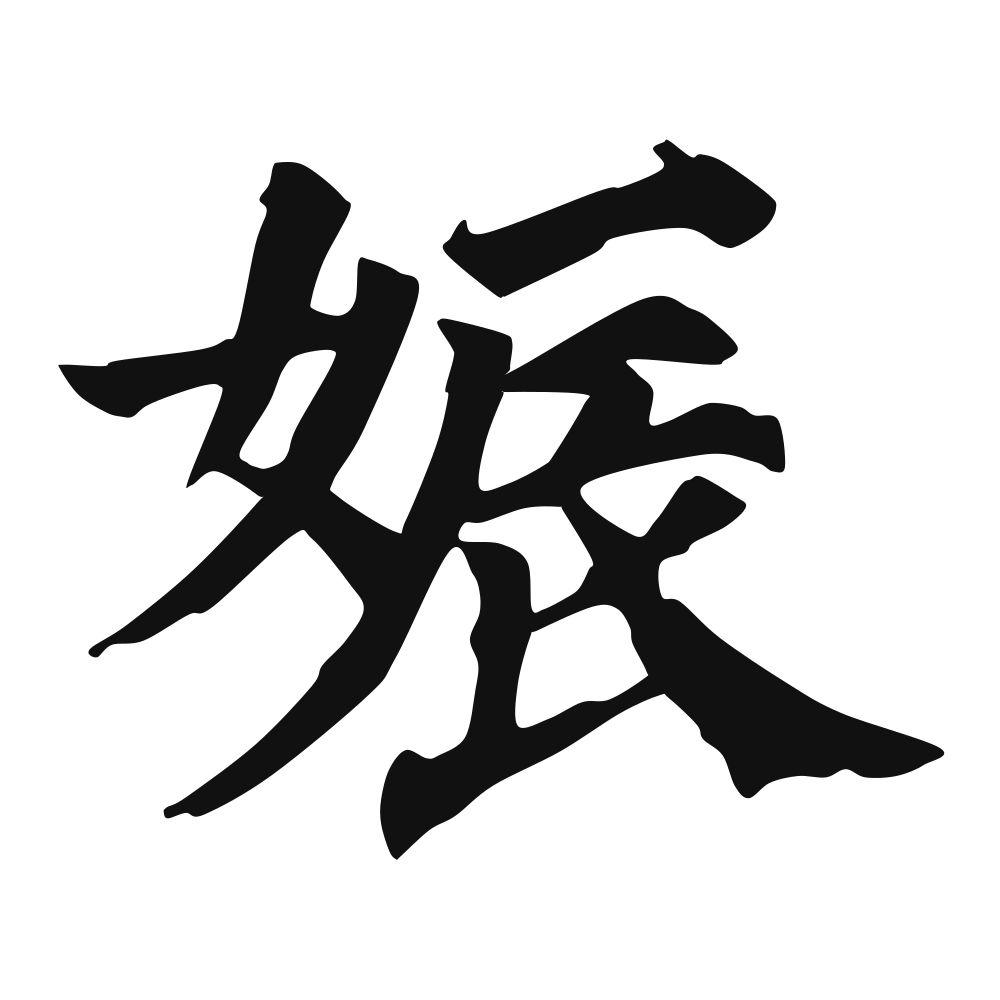
The Calligrapher — Yán Zhēnqīng 颜真卿
Tang master of robust regular script; co-creator of the enduring 'Yan style'.
Tang calligrapher (709–784), master of regular script/running script — the Tang moral paragon whose upright, muscular regular script became the model of Chinese integrity in writing. Tang dynasty
Cultural Story
In the classical tradition 娠 named the carried child, the state of being with child. Medical and ritual texts treated 妊娠 as a condition demanding care and taboos, and histories noted a queen's 娠 as a matter of state. The word carried the gravity of continuation, the body as vessel of the lineage.
Common words & phrases
- 妊娠 pregnancy · pregnant
Read the story behind the character
In the modern world 娠 is the clinical, caring term for pregnancy. A clinic poster advises on 妊娠 health, and an app tracks each 妊娠 week with illustrations. Friends ask gently how the 娠 is going, and a doctor explains 妊娠 nutrition. The ancient word now frames prenatal care, ultrasounds, and hopeful countdowns.
Why this character belongs on skin
The character is a woman and a thunder-sign — and what is gestation, finally, but thunder waiting inside the body? It means to be with child, but more precisely the quickening: the first stir, the secret tremor before anything shows. Ancient texts used it for that moment when the future begins to move on its own. Every great undertaking has this phase — the manuscript unstarted, the business unannounced, the change of heart not yet spoken — and the word dignifies it: the hidden months are not idleness, they are construction. Sensual, too, the way all fertility is: the body knowing something before the mouth can say it. Wear it for what you are carrying. The world will see it soon enough. Until then, the ink knows.
Own this character
Purchase delivers the original SVG of this glyph, brushed by Yán Zhēnqīng 颜真卿, ready to place on skin, paper, or screen.