
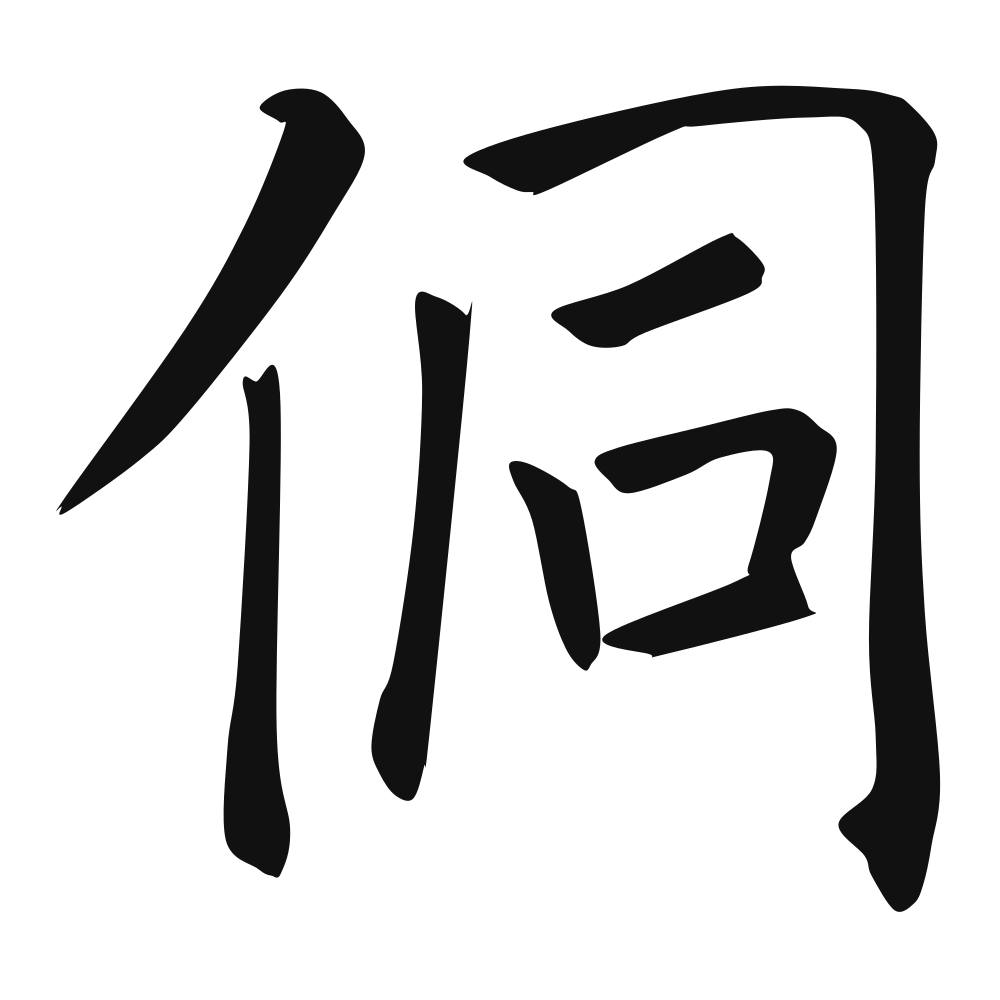
侗
Dong ethnic group; ignorant
Closest English meanings
Dong (ethnic group)·naive
The Calligrapher — Chǔ Suíliáng 褚遂良
Tang chancellor and regular-script master of elegant, balanced strokes.
Tang calligrapher (596–658), master of regular script — Tang master of graceful, tensile regular script favored by the imperial court. Tang dynasty
Cultural Story
侗 names a people and a plainness. The 侗族 build the wind-and-rain bridges of Guizhou, their 侗乡 loud with lusheng pipes at the new year. In old usage 侗 also meant naive, uncarved like wood. The character holds both a nation's name and the look of unworked timber.
Common words & phrases
- 侗族 Dong ethnic group
- 侗乡 Dong village region
Read the story behind the character
A tour ad invites you to 侗乡 for the festival; the 侗族 choir sings on the stage. In speech a 侗 person may be called simple, though the word now often means rural, not foolish. A people, a region, and an old slight at innocence all sit in this one character.
Why this character belongs on skin
侗 is the character of the soul before it hardens. The person radical beside 同, together, same — it describes the childlike state the Daoists guarded like treasure: 侗乎其无识, wrote Zhuangzi, dazed and unknowing, the sage returning to the mind of the babe. Not ignorance — innocence. The difference is everything. Ignorance has never looked; innocence has looked and chosen to remain soft. Christ said the kingdom belongs to such as these. Laozi said the great carver does no cutting. Both pointed at the same open hand. Modern life is a conspiracy against this state; it drafts you into opinion, irony, defense, until you are armored to the teeth and starving. 侗 is the escape hatch drawn in ink. It does not ask you to become naive again. It asks you to set the armor down for one honest hour, the way you did before you knew what rooms were for. Wherever you place this character, it will do its quiet work: softening the hand that touches it, including your own.
Own this character
Purchase delivers the original SVG of this glyph, brushed by Chǔ Suíliáng 褚遂良, ready to place on skin, paper, or screen.