
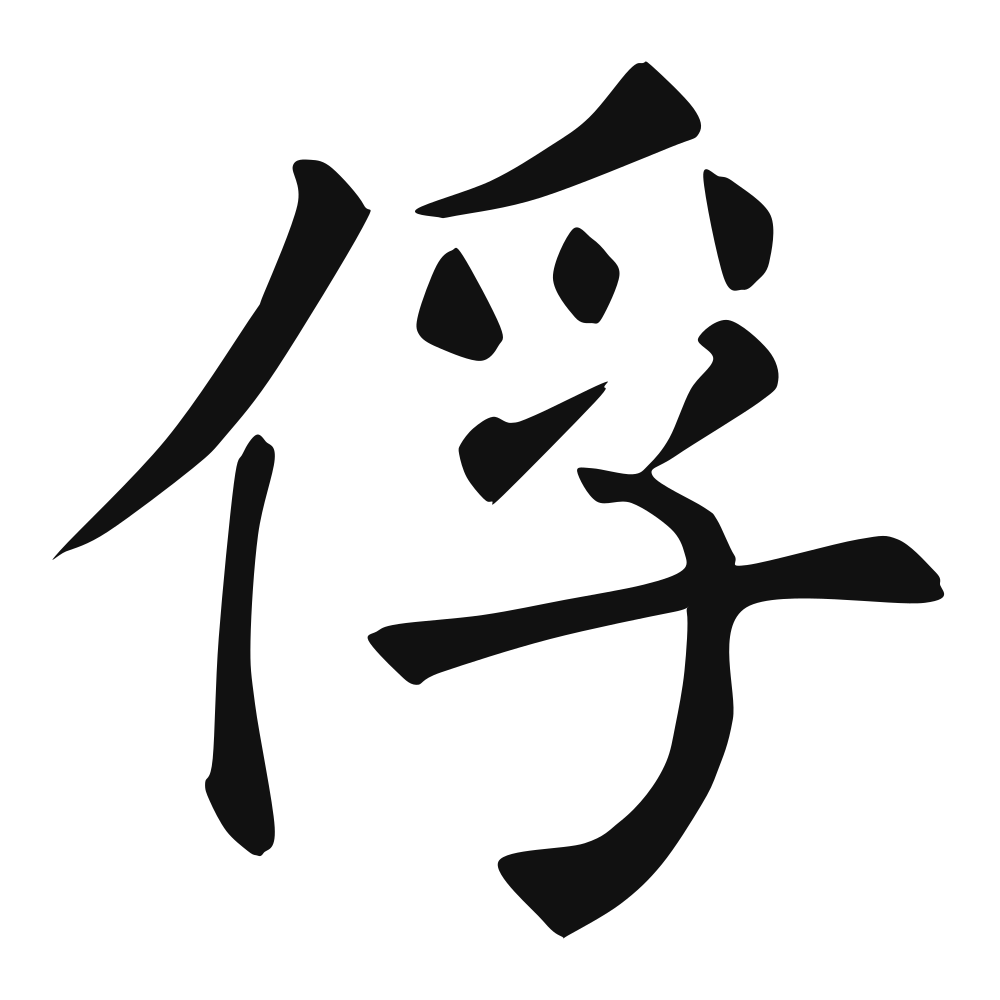
俘
to take prisoner; prisoner of war
Closest English meanings
capture·prisoner
The Calligrapher — Chǔ Suíliáng 褚遂良
Tang chancellor and regular-script master of elegant, balanced strokes.
Tang calligrapher (596–658), master of regular script — Tang master of graceful, tensile regular script favored by the imperial court. Tang dynasty
Cultural Story
俘 is the taken one. The 左传 counts 俘虏 after a border war; a general 俘获 the enemy's banner. To be 俘 was to lose the field and the name. The histories number the prisoners in long cold columns. The character is the moment a free man becomes another's hold.
Common words & phrases
- 俘虏 captive · prisoner of war · capture
- 俘获 capture · seize
Read the story behind the character
A war film shows the 俘虏 marched off-screen; a game lets a player 俘获 the enemy flag. The morning bulletin counts the 俘 taken at the front. Caught, seized, held — this word still marks the instant of losing the field, whether on screen, in play, or in the headline.
Why this character belongs on skin
The bowstring loosens and the man across the field is no longer an enemy but a soul in your hands. 俘 is the captive, the one taken in war—not killed but held, his freedom forfeit to another's will. The ancients counted such men among the spoils; the wise commander saw in them a mirror: today the taken, tomorrow the taker. To be 俘 is to know the terror of being owned, and the strange mercy of survival. We are all captured by something—love, debt, a face we cannot forget. To wear this mark is not to boast of conquest but to confess the taking: that something claimed you, and you did not escape, and perhaps were glad to be held. Let it rest on your skin as a gentle shackle—proof that even your freedom was once surrendered, willingly, to a greater thing.
Own this character
Purchase delivers the original SVG of this glyph, brushed by Chǔ Suíliáng 褚遂良, ready to place on skin, paper, or screen.