
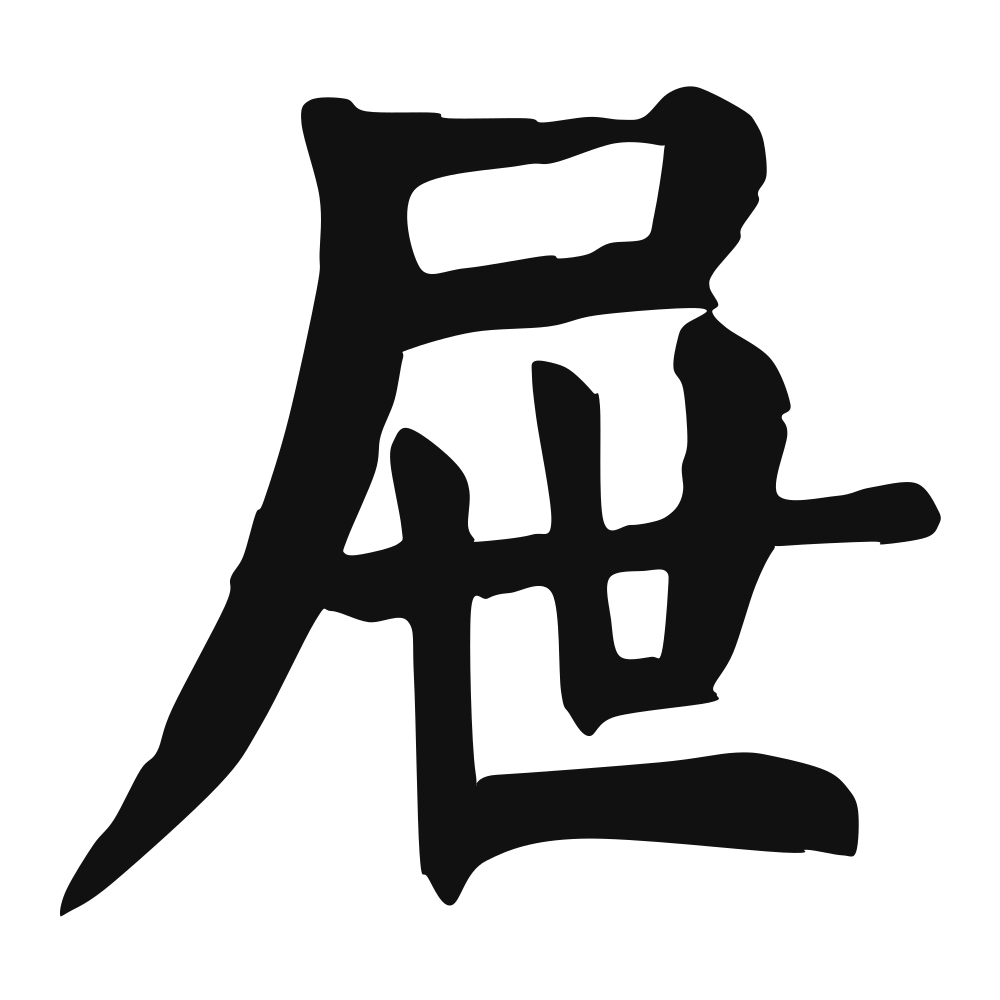
The Calligrapher — Yán Zhēnqīng 颜真卿
Tang master of robust regular script; co-creator of the enduring 'Yan style'.
Tang calligrapher (709–784), master of regular script/running script — the Tang moral paragon whose upright, muscular regular script became the model of Chinese integrity in writing. Tang dynasty
Cultural Story
屉 is a later character for a sliding drawer or tray, built from 尸 and 世; it names the 抽屉 (drawer) of a desk and the 笼屉 (steamer tray) of a kitchen. Though absent from the oldest classics, it became essential in daily and culinary life across later imperial China's homes.
Common words & phrases
- 抽屉 drawer
- 屉子 drawer · tray
- 笼屉 steamer tray
Read the story behind the character
You rummage the 抽屉 (drawer) for chargers, and a 屉子 (drawer, tray) holds the silverware. At the dim-sum house, the 笼屉 (steamer tray) stacks high with buns, and the waiter lifts each 屉 to reveal lunch. The character is humble hardware — the slide and the steam — yet it runs every kitchen and desk.
Why this character belongs on skin
You keep the things you cannot throw away in a drawer—the letter, the ticket, the small proof you were loved. 屉 is the drawer, the sliding box within the greater frame, a private room inside the public self. To choose this character is to honor the kept things, the archive no one sees when they look at you. We are all furnished with hidden compartments: griefs we have filed, joys we revisit at midnight, the self that does not perform. The Daoist understands containment as a form of freedom—what is stored can be opened; what is open may also be closed. Let 屉 rest upon your hip or your side, the place closest to where you fold yourself away. It is a mark for the interior life, the confession that you are larger than your front door. The ink becomes a drawer of its own, holding the parts of you that deserve to be kept, not displayed. Pull it open only when you wish to remember.
Own this character
Purchase delivers the original SVG of this glyph, brushed by Yán Zhēnqīng 颜真卿, ready to place on skin, paper, or screen.