
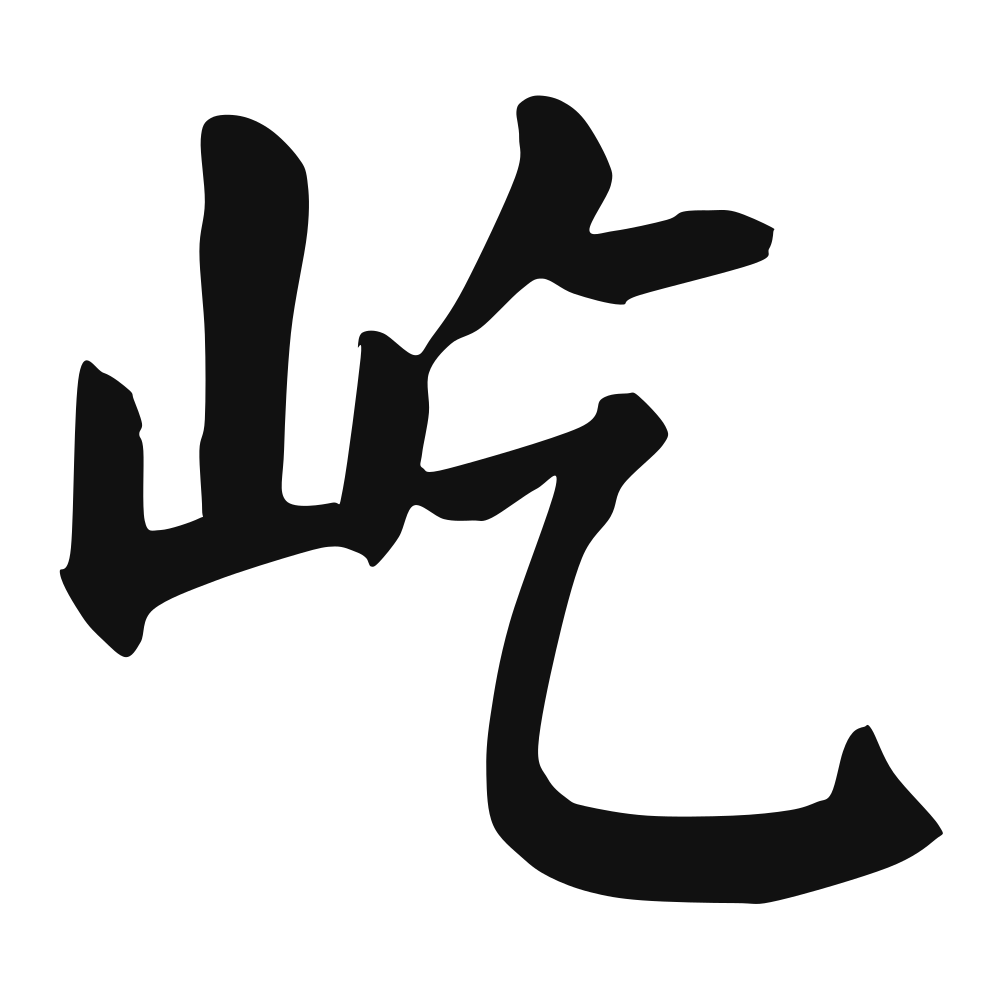
屹
high and steep
Closest English meanings
towering·standing erect
The Calligrapher — Yán Zhēnqīng 颜真卿
Tang master of robust regular script; co-creator of the enduring 'Yan style'.
Tang calligrapher (709–784), master of regular script/running script — the Tang moral paragon whose upright, muscular regular script became the model of Chinese integrity in writing. Tang dynasty
Cultural Story
屹 joins 山 and 乞, meaning to stand towering and erect; the usage paints a peak that does not move. A cliff 屹立 (stands erect, towers) against the wind, and the 屹然 (towering) stance of a hero became a literary image of unshakeable resolve before adversity and threat.
Common words & phrases
- 屹立 stand erect · tower
- 屹然 towering
Read the story behind the character
The old bridge 屹立 (stands erect, towers) after a century of floods, and a guard 屹然 (towering) holds the post. We describe a principled leader as 屹立 against pressure, unmoved by the crowd. The character gives mountains — and people — the quality of standing fast, a quiet monument word for resolve.
Why this character belongs on skin
There are things that do not bend. Not because they are cruel, but because they have decided. 屹 is the standing — a mountain on its feet, unmoved by the weather that breaks everything else around it. The phrase 屹立, to stand erect, is what they say of a people, a spirit, a love that refused to topple when the ground gave way. In the West we worship the flexible, the adaptable, the man who bends to survive. But somewhere beneath that wisdom is the fear that we will never hold. To wear 屹 is to make a different vow: that some part of you will remain upright, indifferent to the storm, a fixed point the wind cannot relocate. It is the ink for the person who has been through the earthquake and is still standing in the same spot, quieter now, and immovable.
Own this character
Purchase delivers the original SVG of this glyph, brushed by Yán Zhēnqīng 颜真卿, ready to place on skin, paper, or screen.