
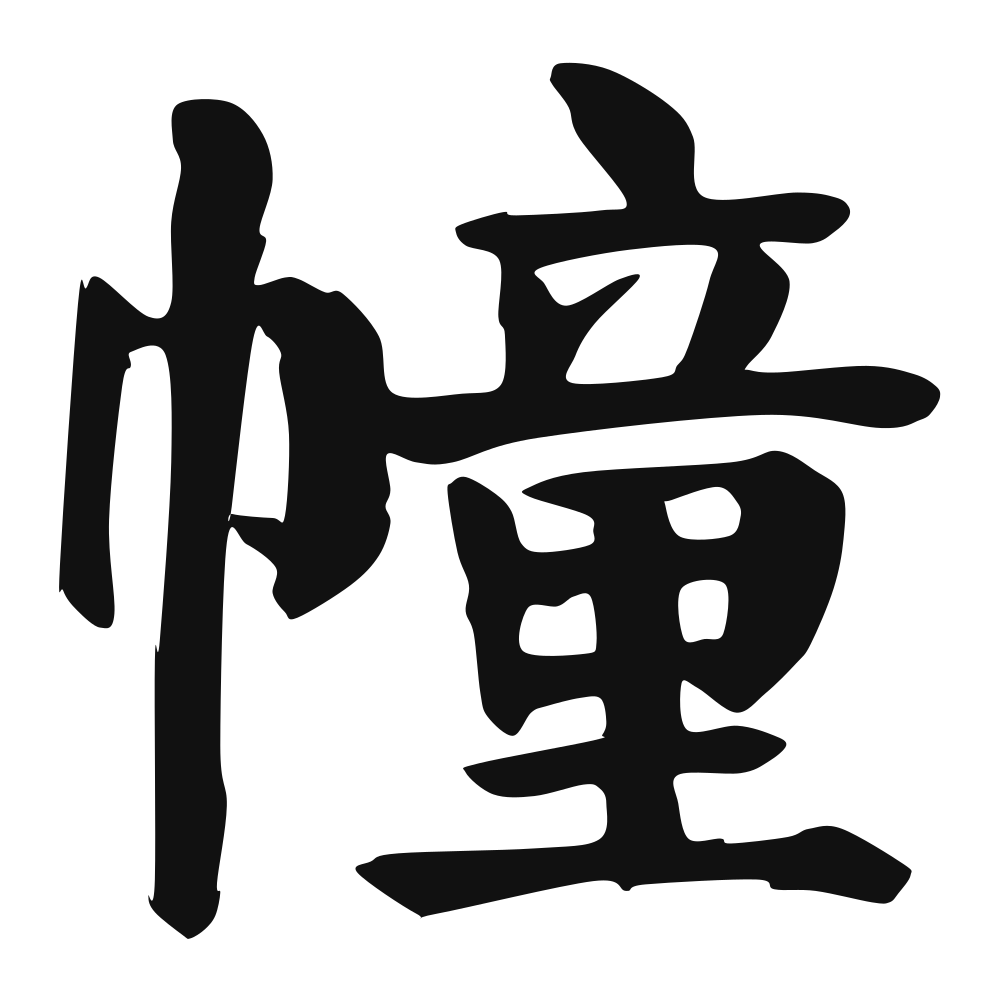
幢
banner; pennant (in ancient China); (archaic) curtain hung over boat or carriage windows
Closest English meanings
banner·pennant·(building, zhuang)
The Calligrapher — Yán Zhēnqīng 颜真卿
Tang master of robust regular script; co-creator of the enduring 'Yan style'.
Tang calligrapher (709–784), master of regular script/running script — the Tang moral paragon whose upright, muscular regular script became the model of Chinese integrity in writing. Tang dynasty
Cultural Story
幢 is a banner and, in Buddhist China, a stone pillar carved with sutras. The Shuowen classes it among pennants, and the 經幢 - a sutra pillar - rose in temple yards to spread the scriptures skyward. Paired with 幡 as 幢幡, it decorated processions, while 幢幢 described flickering, swaying shadows. The word thus moves from a cloth flag to a carved stone, both meant to lift the eye and the spirit toward the sacred.
Common words & phrases
- 經幢 Buddhist stone pillar · sutra pillar
- 幢幡 banners and pennants
- 幢幢 flickering · wavering (shadows)
Read the story behind the character
Tourists photograph a Tang 經幢, a sutra pillar, in a temple courtyard, and processions still bear 幢幡, banners, at festivals. The literary 幢幢 paints shifting, shadowy light - '人影幢幢,' figures flickering in the dark. Though rarely spoken daily, the 幢 endures in heritage sites and ghostly poems, a word that marks where the earthly and the devotional meet in stone and swaying cloth.
Why this character belongs on skin
Silk hanging from a temple pole, turning slowly in the mountain wind: 幢 is the character for a banner, a pillar of cloth, and in Buddhism it became a sacred sight—the 经幢, sutra pillars carved in stone or hung in silk, scripture standing upright in the landscape so that even the wind, moving it, recited. Every gust was a reader. Every traveler who passed and saw it had, by the doctrine, already heard a line of the teaching. A banner does nothing but declare. Armies knew the other kind: 幢 the military standard, the flag a thousand men oriented their courage around, the thing that, falling, lost the day. Both banners ask the same question: what do you orient on? When the wind of a life moves you, what text is printed on the moving part? To wear 幢 is to answer with the skin. I am a standard of one. The mountain wind will handle the recitation. You just have to be the cloth.
Own this character
Purchase delivers the original SVG of this glyph, brushed by Yán Zhēnqīng 颜真卿, ready to place on skin, paper, or screen.