
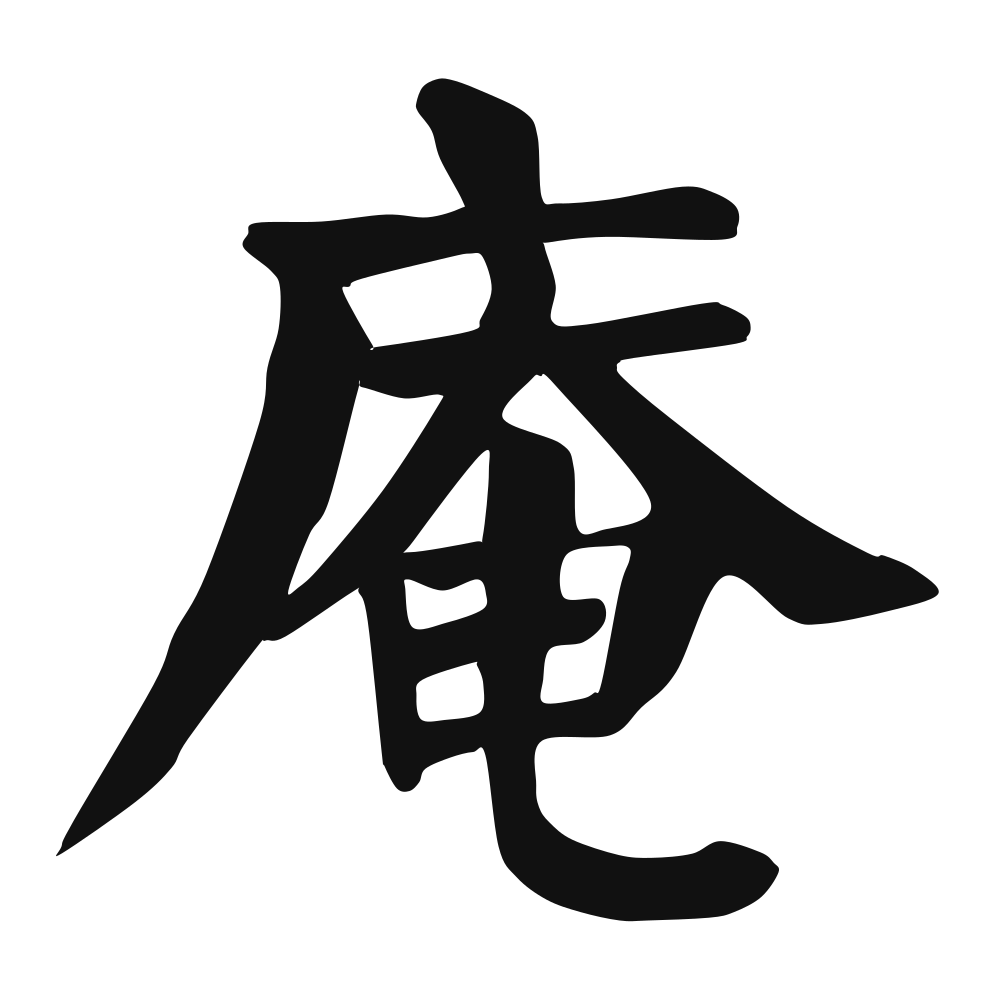
庵
hut; small temple; nunnery
Closest English meanings
hut·nunnery
The Calligrapher — Yán Zhēnqīng 颜真卿
Tang master of robust regular script; co-creator of the enduring 'Yan style'.
Tang calligrapher (709–784), master of regular script/running script — the Tang moral paragon whose upright, muscular regular script became the model of Chinese integrity in writing. Tang dynasty
Cultural Story
庵 is the small thatched hut, and 唐寅 wrote his 桃花庵歌 there, laughing at officials while he drank among peach trees. The word drifted to the nun's cell — 尼姑庵 — a quiet house where women who left the marriage market kept a different one.
Common words & phrases
- 尼姑庵 nunnery
- 庵堂 nunnery · hut
- 茅庵 thatched hut
- 庵子 hut
Read the story behind the character
尼姑庵 still stands on hillsides outside 蘇州 and 杭州, a working refuge more than a tourist stop. 茅庵 names the tea house that promises rusticity for a premium. The hut is no longer a poet's joke but a brand, or a real quiet, depending on which hill you climb.
Why this character belongs on skin
The small hut is the largest freedom. 庵 is the humble shelter—a monk's cell, a widow's dwelling, a place with one room and therefore one truth. The Buddhists built 庵 for those who left the market's noise to sit with nothing but breath and the wall. To tattoo 庵 is to carry a retreat on your skin: proof that somewhere in you there is a door that closes, a silence you can return to when the world gets loud. The Daoist hermit and the Christian anchorite knew the same thing—the unfurnished room is where you finally hear yourself. Let this character rest near your heart or your shoulder as a vow to keep a corner of your life unoccupied by anyone's demand. You built the hut. You keep the key.
Own this character
Purchase delivers the original SVG of this glyph, brushed by Yán Zhēnqīng 颜真卿, ready to place on skin, paper, or screen.