
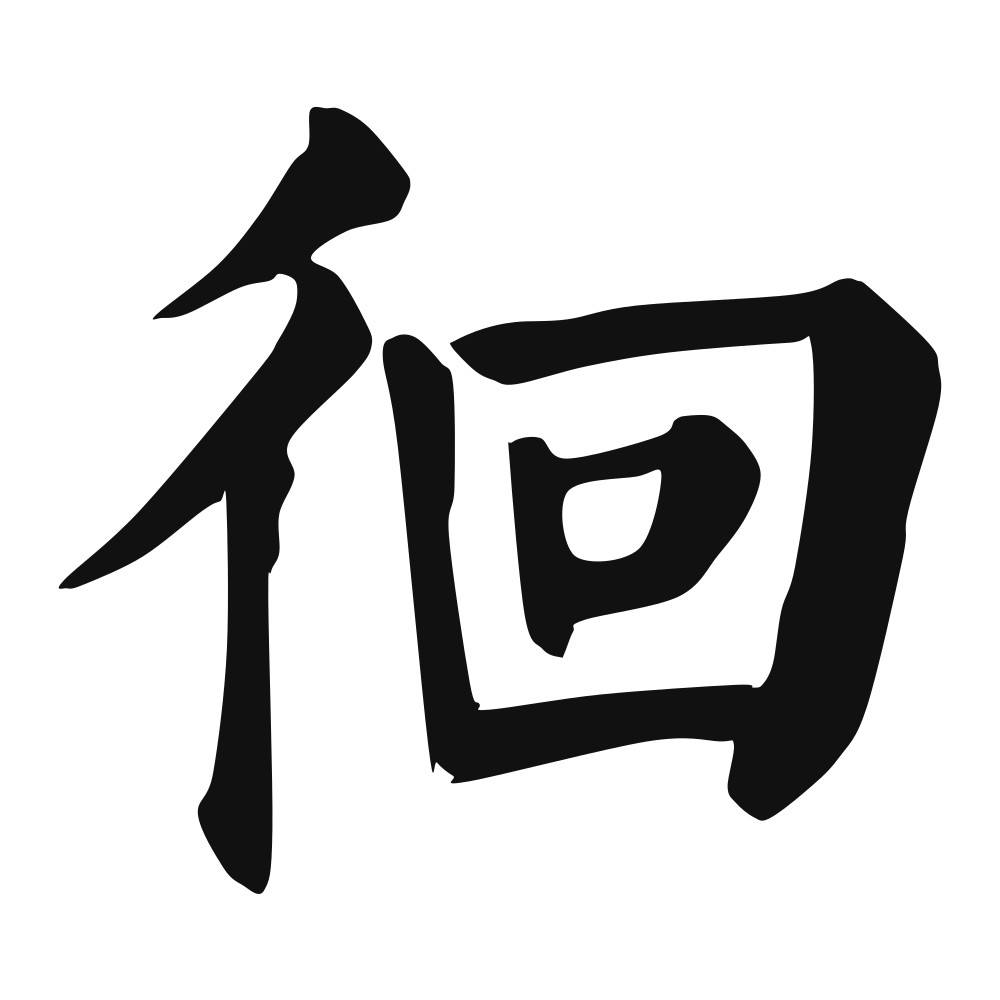
徊
usually seen in: to pace back and forth (徘徊)
Closest English meanings
pace·wander·linger
The Calligrapher — Yán Zhēnqīng 颜真卿
Tang master of robust regular script; co-creator of the enduring 'Yan style'.
Tang calligrapher (709–784), master of regular script/running script — the Tang moral paragon whose upright, muscular regular script became the model of Chinese integrity in writing. Tang dynasty
Cultural Story
徊 is the pace back and forth, the feet that cannot settle. 古詩 leaves a man 徘徊 under the tree at dusk, and the word kept that indecision as motion — not standing still, but going and returning, the body arguing with itself in small steps.
Common words & phrases
- 徘徊 pace to and fro · hesitate · linger
Read the story behind the character
徘徊 is the rate a paper says is stuck, the buyer who walks the showroom twice, the mind that will not close the tab. The tree is a graph now; the pace is the same. We still tread the small argument with our feet, usually about a thing we already decided not to decide.
Why this character belongs on skin
You walk the same stretch of river twice and call it nothing, but the heart knows the truth of 徊 — the turning back, the lingering step that will not commit to leaving. It is the character that lives inside 徘徊, to pace to and fro, and the ancients used it for the soul unable to choose between two doors. There is beauty in the unready: the moth at the window, the thought you turn over at 3 a.m. Buddhist teaching warns against clinging, yet 徊 is the tender evidence that some things are worth circling. To mark it on your body is to honor the part of you that hesitates, that loves the threshold more than the room. Let it rest where your pulse is closest to the surface, a small confession: I am still deciding, and the deciding is its own kind of grace. Stay a while. The ink will wait with you.
Own this character
Purchase delivers the original SVG of this glyph, brushed by Yán Zhēnqīng 颜真卿, ready to place on skin, paper, or screen.