
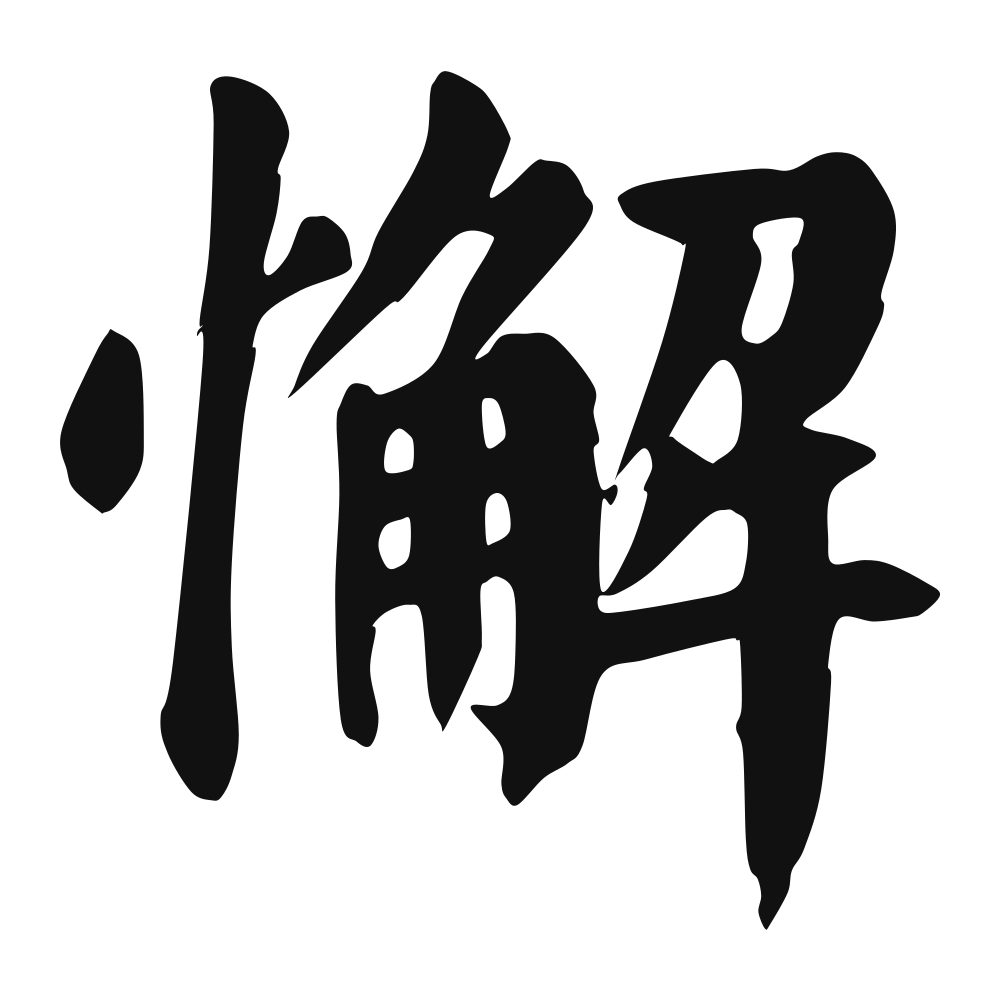
The Calligrapher — Yán Zhēnqīng 颜真卿
Tang master of robust regular script; co-creator of the enduring 'Yan style'.
Tang calligrapher (709–784), master of regular script/running script — the Tang moral paragon whose upright, muscular regular script became the model of Chinese integrity in writing. Tang dynasty
Cultural Story
懈 is the slack that lets the wall fall. The strategists warned that a 懈 moment at the gate is an invitation, and the moralists used 懈怠 for the student who stops when the master leaves. The heart with 解, to loosen, is vigilance come undone. It is the relaxation that costs.
Common words & phrases
- 懈怠 slack · remiss · idle
- 松懈 relax · slacken · loosen
- 懈气 lose heart · slack off
- 无懈可击 flawless · invulnerable
Read the story behind the character
懈 is the lapse: 懈怠 the term paper started late, 松懈 the team that stopped trying, 无懈可击 the pitch with no hole. It names the letting-go that invites failure and the absence of it that wins. The word does the fault and the flawless in one breath.
Why this character belongs on skin
There is a moment, usually at dusk, when the guard's shoulders drop and the whole world leans in. 懈 is that loosening — the slack rope, the unstrung bow, the discipline that quietly walks out the back door. The old martial texts warn against it not because rest is evil but because the relaxed hand betrays everything the tense hand built. Every cathedral was raised by men who did not permit this character into their vocabulary; every ruin is what it leaves behind. Yet there is tenderness in it too — the exhale after the vow, the honest fatigue that follows real effort. To wear 懈 is not to celebrate weakness. It is to make a private treaty with your own drift, to look the slippage in the eye and decline it, day after day, the way a sailor refuses the lee shore. Some ink warns. This one stands watch. Let it sit where you can feel it tightening when you start to let go.
Own this character
Purchase delivers the original SVG of this glyph, brushed by Yán Zhēnqīng 颜真卿, ready to place on skin, paper, or screen.