
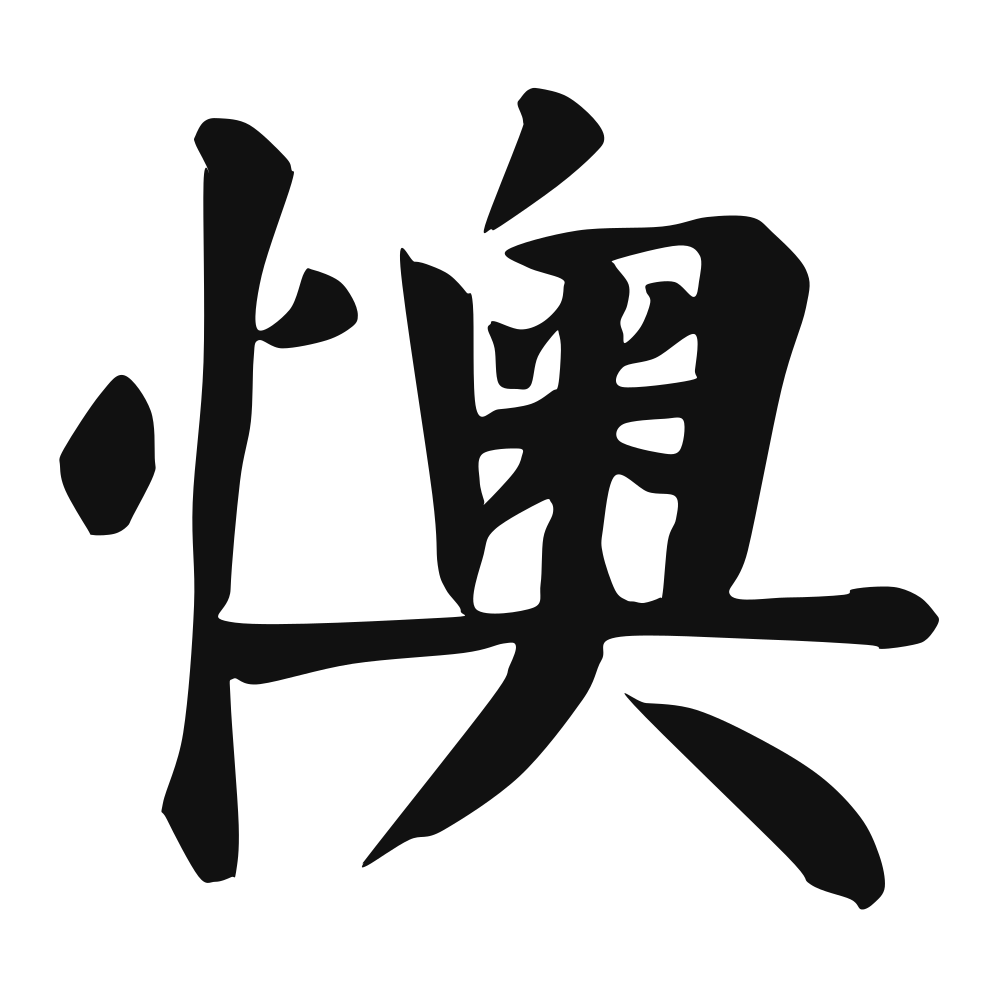
The Calligrapher — Yán Zhēnqīng 颜真卿
Tang master of robust regular script; co-creator of the enduring 'Yan style'.
Tang calligrapher (709–784), master of regular script/running script — the Tang moral paragon whose upright, muscular regular script became the model of Chinese integrity in writing. Tang dynasty
Cultural Story
懊 is regret that chews. The old tale collections use it for the man who, having spoken, wishes the words back; the 楚辭 wails a kindred 懊恼 at fate. The heart with 奥, deep, is a chagrin that goes inward and stays. It is the gnaw, not the cry.
Common words & phrases
- 懊恼 annoyed · regretful
- 懊悔 regret · repent
- 懊丧 dejected · depressed
- 懊恨 regret and resent
Read the story behind the character
懊 is the private sting: 懊恼 the text sent in anger, 懊悔 the year wasted, 懊丧 the plan that collapsed. 懊恨 is the resentment turned on yourself. It names the regret that has no audience, the one you keep because telling would not help.
Why this character belongs on skin
The heart radical sits inside this character because regret is a residence: 懊悔, remorse moving in and refusing to pay rent. Everyone knows its address—the replayed conversation, the unclicked send button, the road taken and the road mourned. The Buddha listed clinging as the root of suffering, and regret is clinging with the calendar turned around, loving a past that will not answer. But the character holds a harder gift. What we rue most fiercely is precisely what we value most clearly—regret is grief's proof that the thing was precious. Christianity built its whole architecture of redemption on the turn that regret makes possible: metanoia, the changed mind, the sinner whose ruin becomes the doorway. So do not ink this to marinate in it. Ink it as the pivot mark—the moment before the better life began. The heart stays in the character. But it moves.
Own this character
Purchase delivers the original SVG of this glyph, brushed by Yán Zhēnqīng 颜真卿, ready to place on skin, paper, or screen.