
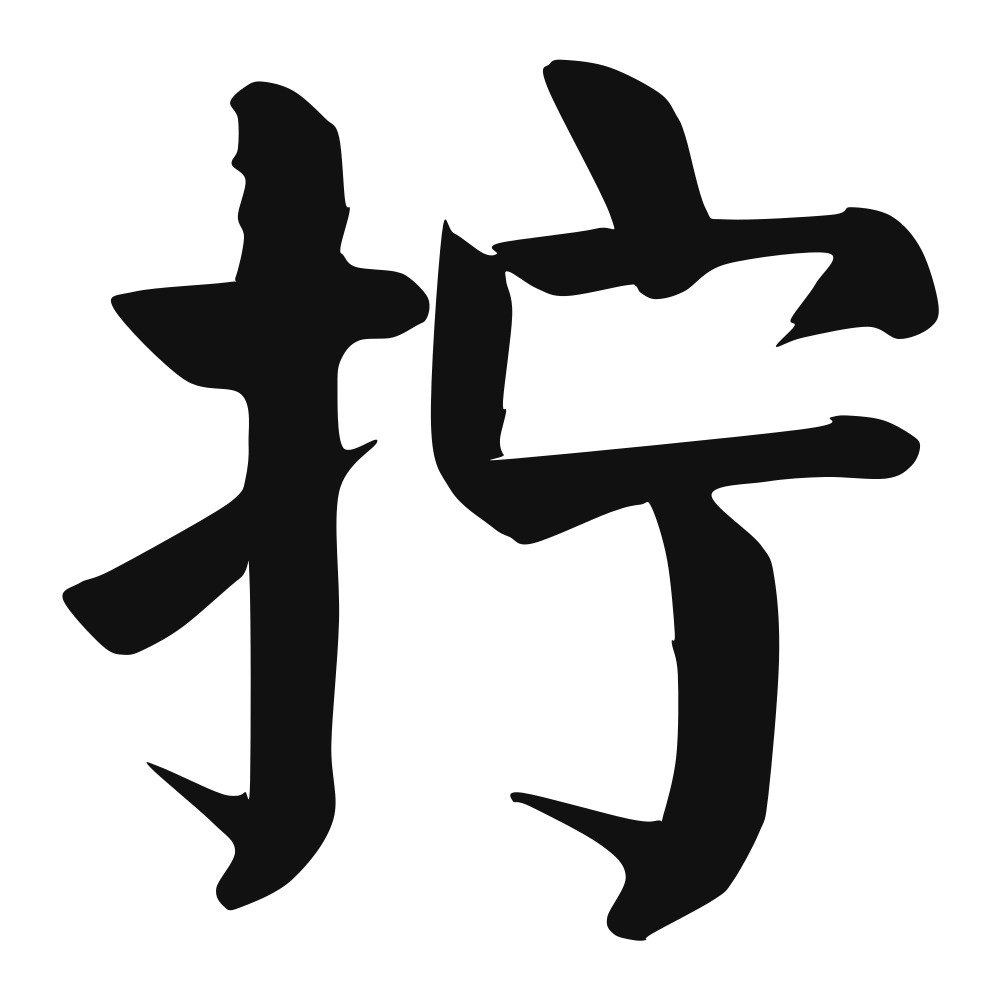
拧
to pinch; wring; mistake; to twist; stubborn
Closest English meanings
twist·wring·screw
The Calligrapher — Yán Zhēnqīng 颜真卿
Tang master of robust regular script; co-creator of the enduring 'Yan style'.
Tang calligrapher (709–784), master of regular script/running script — the Tang moral paragon whose upright, muscular regular script became the model of Chinese integrity in writing. Tang dynasty
Cultural Story
A mechanical latecomer, 擰 barely exists in the pre-modern books; it is the twist of a wet cloth and, later, of a screw. The hand that 擰乾s a shirt is the same hand that 擰緊s a bolt, both motions a rotation against resistance, and the thread of a screw is only the wet cloth's wring made permanent in steel.
Common words & phrases
- 拧干 wring dry
- 拧紧 screw tight
- 拧巴 twisted · awkward
- 拧断 twist off
Read the story behind the character
You 擰緊 a tap; a person is 擰巴, twisted and awkward inside, unable to sit straight with himself. The word moved from laundry to plumbing to personality, a small spiral of tension the language borrowed to describe anything wound too tight, and the twisted man is only the twisted cloth, still dripping, still refusing to lie flat.
Why this character belongs on skin
A wet cloth in both fists, and the water leaving it in a thin silver thread—this is níng, the twist that wrings truth out of what holds too much. Hands turn against each other and something yields. We twist the towel, the neck of a bottle, the fate we are given until it runs a different way. There is violence in it, and tenderness too: the mother wringing her child's clothes by a river, the warrior wringing the last strength from his failing arm. To live well is to know when to twist and when to be twisted, to let pressure shape you without breaking you. Ink this on the forearm where the muscle turns—a small reminder that you have been wrung, and did not come apart. You hold your own water. You decide what stays.
Own this character
Purchase delivers the original SVG of this glyph, brushed by Yán Zhēnqīng 颜真卿, ready to place on skin, paper, or screen.