
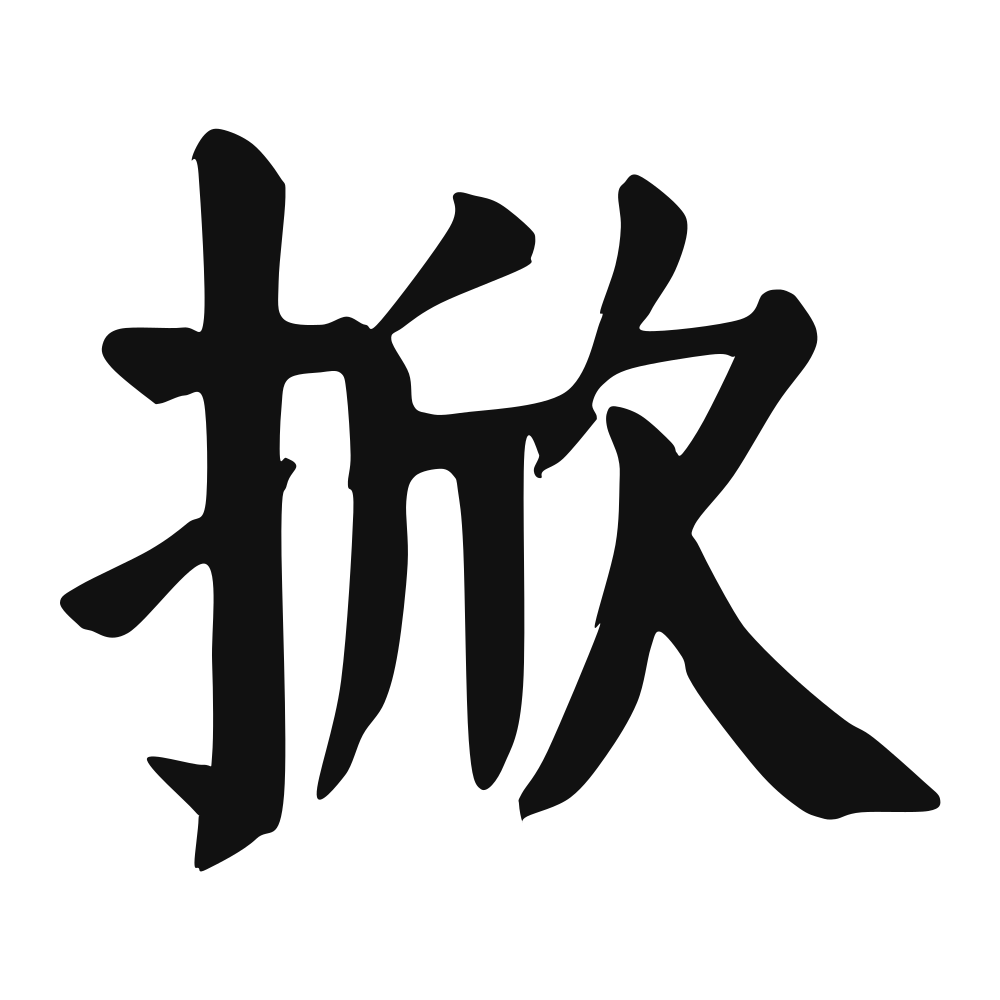
掀
to lift (a lid); to rock; to convulse
Closest English meanings
lift·open·stir up
The Calligrapher — Yán Zhēnqīng 颜真卿
Tang master of robust regular script; co-creator of the enduring 'Yan style'.
Tang calligrapher (709–784), master of regular script/running script — the Tang moral paragon whose upright, muscular regular script became the model of Chinese integrity in writing. Tang dynasty
Cultural Story
A lifting word, 掀 is the hand on the edge of the lid, the cover raised to show what was hid. The classics said 舉 or 揭; 掀 is the more violent lift, the storm that 掀s the roof or the man that 掀s the table in rage, and the table flipped because the argument underneath it had already been flipped, quietly, weeks before.
Common words & phrases
- 掀起 lift · set off
- 掀开 lift open
- 掀翻 overturn
- 掀动 stir · move
Read the story behind the character
A wind 掀開 the tarp; a protest 掀起s a wave; a boy 掀翻s the stool; a hand 掀動s the curtain. The roof is a stool now. The lift that showed the hidden thing is the same, whether it uncovers a crate or merely ends a meeting by force, and the curtain is only the tarp, drawn back to reveal a room someone preferred dark.
Why this character belongs on skin
A hand takes the edge of the covering cloth and lifts, and the statue is suddenly there in the light it had been waiting for. To unveil is to dare, to pull back what was hiding a truth and stand exposed to it. The character is the hand at the hem, the act of turning something up to the sun. The Dao tells of the wind that lifts the curtain and shows the room was always larger than we feared. To carry this mark is to honor the moment you lifted the corner of your own life and looked. It is the gesture of one who would rather see than stay safe in the dark. Wear it where you can touch it when the old coverings settle back, a small command to yourself to keep lifting, to keep letting the daylight in on what you were afraid to name.
Own this character
Purchase delivers the original SVG of this glyph, brushed by Yán Zhēnqīng 颜真卿, ready to place on skin, paper, or screen.