
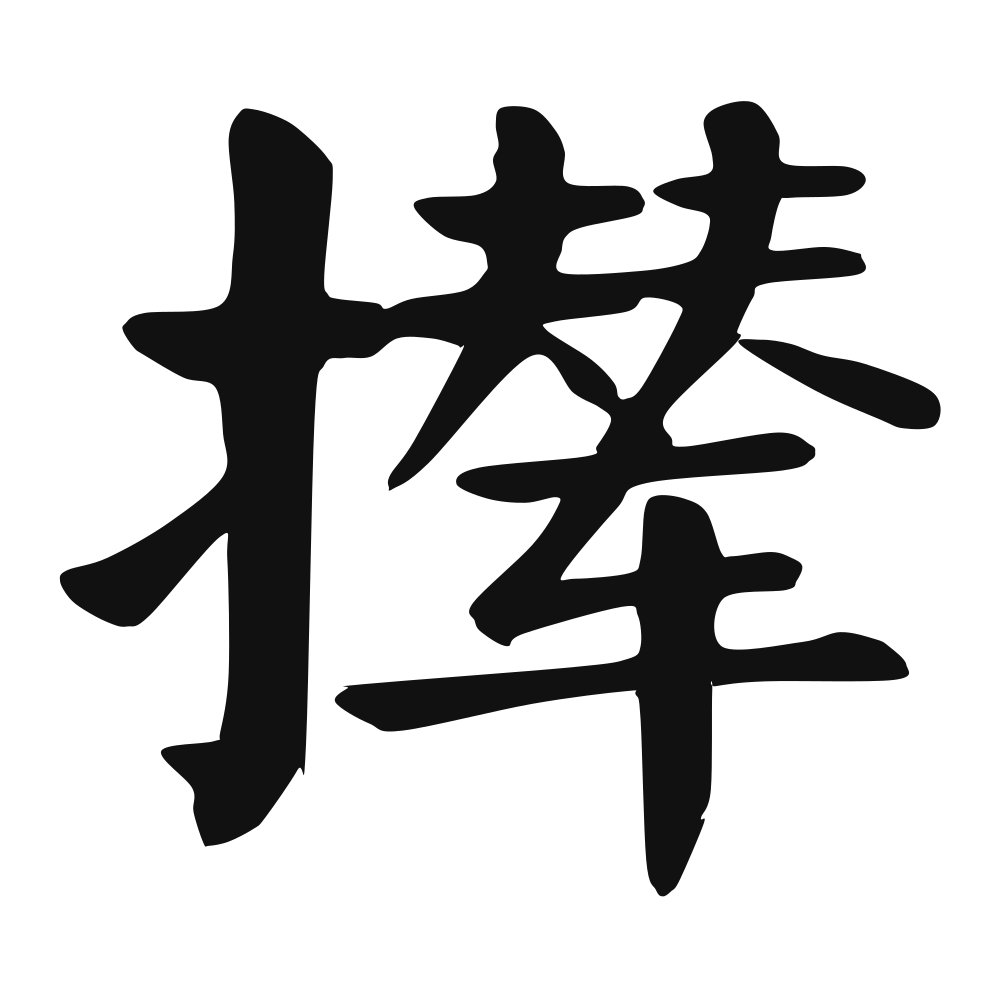
撵
to expel; to oust; (dialect) to chase after; to try to catch up with
Closest English meanings
drive out·oust
The Calligrapher — Yán Zhēnqīng 颜真卿
Tang master of robust regular script; co-creator of the enduring 'Yan style'.
Tang calligrapher (709–784), master of regular script/running script — the Tang moral paragon whose upright, muscular regular script became the model of Chinese integrity in writing. Tang dynasty
Cultural Story
撵 is a late, colloquial verb little loved by the classics, built from 辶 'to go' and a phonetic. It names the act of shooing — a servant 撵 from the hall, a dog from the kitchen. It carries no grand allusion, only the household gesture. Where older texts wanted 'expel' they reached for 逐 or 驱; 撵 is the word of the courtyard and the doorway.
Common words & phrases
- 撵走 drive away
- 撵出 oust
Read the story behind the character
In a Beijing hutong a grandmother 撵 her grandson out to play; a shopkeeper 撵 a loiterer from the doorway. 撵走 is what the street sweeper does to the parked bike, 撵出 what the landlord does at month's end. It is the small, daily power of the broom and the pointed finger, never the decree.
Why this character belongs on skin
Every house learns this verb eventually. 撵 is to chase out, to drive away—the landlord's word, the exorcist's word, the word of the farmer shooing the fox from the henhouse at midnight with a lantern and no patience left. And yet notice how much love the gesture can carry. Mothers 撵 children out to play, out to live, out from under the wing. Every exorcism is really a boundary drawn in defense of something warm inside the walls. What needs driving from you? The shame that moved in rent-free years ago. The voice that narrates your failures at 3 a.m. Take the broom, take the lantern. Some nights you are the house. Some nights you are the one holding the door, saying: out. Now.
Own this character
Purchase delivers the original SVG of this glyph, brushed by Yán Zhēnqīng 颜真卿, ready to place on skin, paper, or screen.